


Our series commemorating the 80th anniversary of the Allied Occupation of Japan concludes with the godfather of manga, Tezuka Osamu.
If you haven’t read the previous instalments, they’re available here (some were previously paywalled, but all are now freely available):
Part I - The Blue-Eyed Shōgun (Douglas MacArthur)
Part II - The Gangster (Kodama Yoshio)
Part III - The Star (pop icon Misora Hibari)
Part IV - The Entrepreneurs (Sony’s two founders)
All these figures have left extraordinary legacies. MacArthur oversaw the adoption of a new, American-authored constitution for Japan. Eighty years ago this month, it was being hotly debated in the Japanese Diet (parliament). It’s still being debated now, with Japan’s ruling LDP actively considering ways of amending the constitution to help up beef up the country’s defensive arrangements in uncertain times.
Japanese gangsterism seems to be in decline, although a new history of the infamous yakuza - which I’ll post about another time - argues that we ought never to count them out. Either way, one of Kodama’s major legacies has been the corrupting influence of money in Japanese politics, with many an LDP leader meeting their end after questions were asked about the party’s finances…
Japanese music is going strong around the world, especially with younger generations turning to Japanese and (South) Korean pop. More and more bands are now being formed from a combination of Japanese and Korean members - something unthinkable back at the start of the Occupation.
In entrepreneurship, critics would say that Japan has lost out, of late, to Korea and China. But that may change. The Japanese government recently announced a staggering $6 billion of investment in ‘physical AI’: robots that will run on an AI model made in Japan - the aim is to have 10 million of them operating by 2040, across sectors including defence and social care. The massive demographic challenges that I’ve covered before in this newsletter, plus competition with China and doubts about America’s future reliability, have been concentrating minds in Japan’s government and tech sectors.
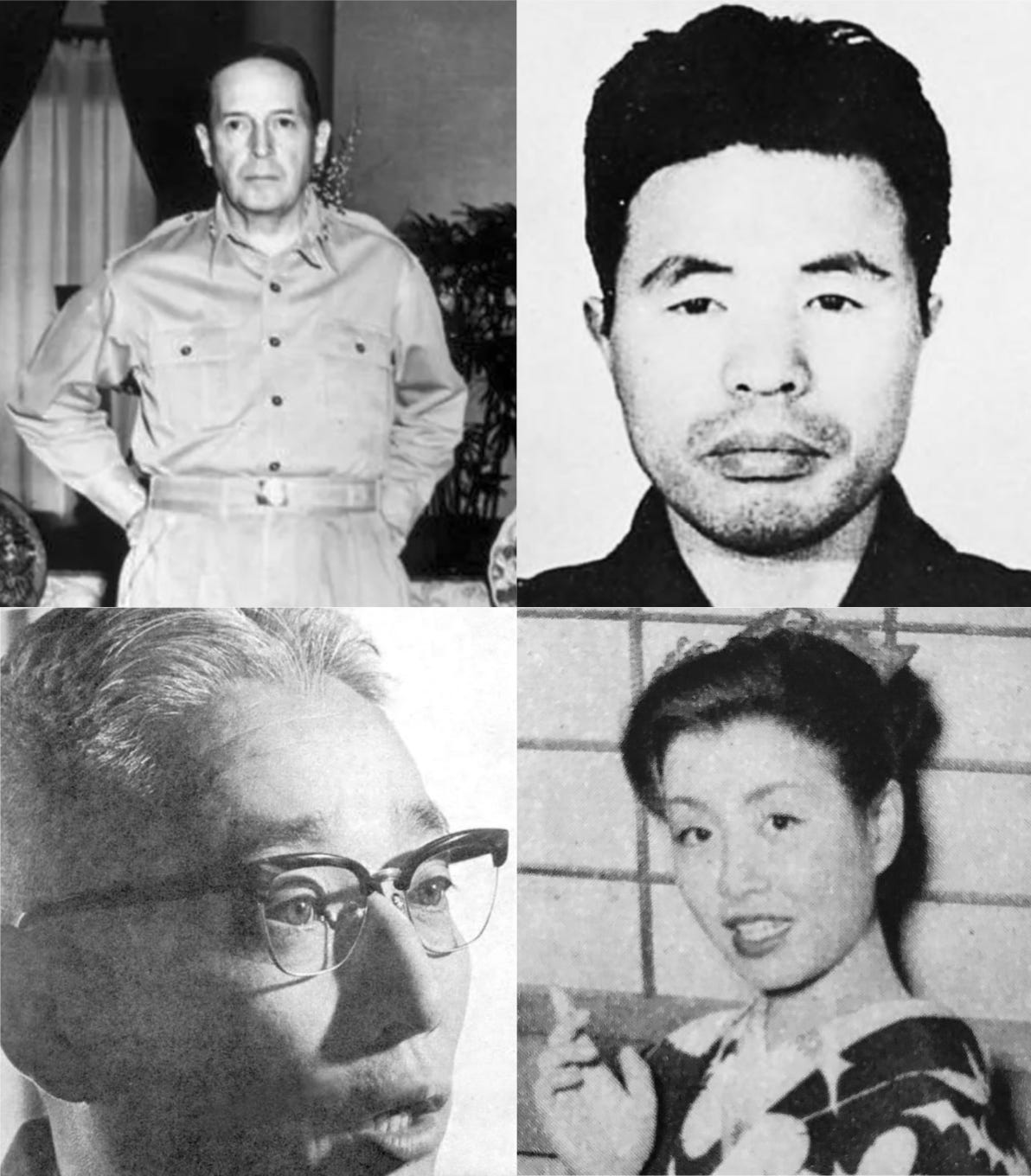
Clockwise from top-left: Douglas MacArthur, Kodama Yoshio, Misora Hibari and Morita Akio (one of the founders of Sony)
In Japan, as everywhere else, people have mixed feelings about the impact of AI in their lives. That includes the world that Tezuka Osamu helped to bring into being: manga. Pessimists wonder whether the last generation of manga artists, drawing by hand, may already be passing away.
The economics of manga have always been tight: heavy competition, combined with poor pay and a great deal of uncertainty for artists. No-one yet knows whether AI will tip that balance even further against traditional artistry - or whether it may actually boost it, as ‘not made with AI’ becomes a premium feature of creative output. I hope it doesn’t need saying (!), but this newsletter is 100% human…
Whatever happens to manga over the coming months and years, the legacy of Tezuka Osamu has been perhaps the greatest of anyone in my series. Born in Osaka prefecture in 1928, he grew up watching European and American cartoons on a home film projector and visiting the famous Takarazuka Revue with his mother.
He experienced World War II for himself as a young man, watching charred bodies float down a river in Osaka during the firebombing of Japan. It made him determined to play his part in making sure that something like this could never happen again.
The result was what you might call the ‘secret sauce’ of Japanese manga and anime, developed by Tezuka and those who came after him. One of the reasons, he thought, why Japan had ended up with a repressive, authoritarian and dangerously expansionist government by the late 1930s was that young people had not been brought up to be wise to the ways of the adult world - to be sceptical about what Tezuka regarded as the evil that can exist in people’s hearts.
Qualifying as a doctor in 1951 but choosing to pursue manga over medicine, Tezuka wanted his work to move beyond what he regarded as the beautiful and ground-breaking yet too-childlike fare that was coming out of Europe and the United States, most notably from his idol Walt Disney. He instead wanted to create manga that would take children seriously, acknowledging their maturity and refusing to talk down to them.
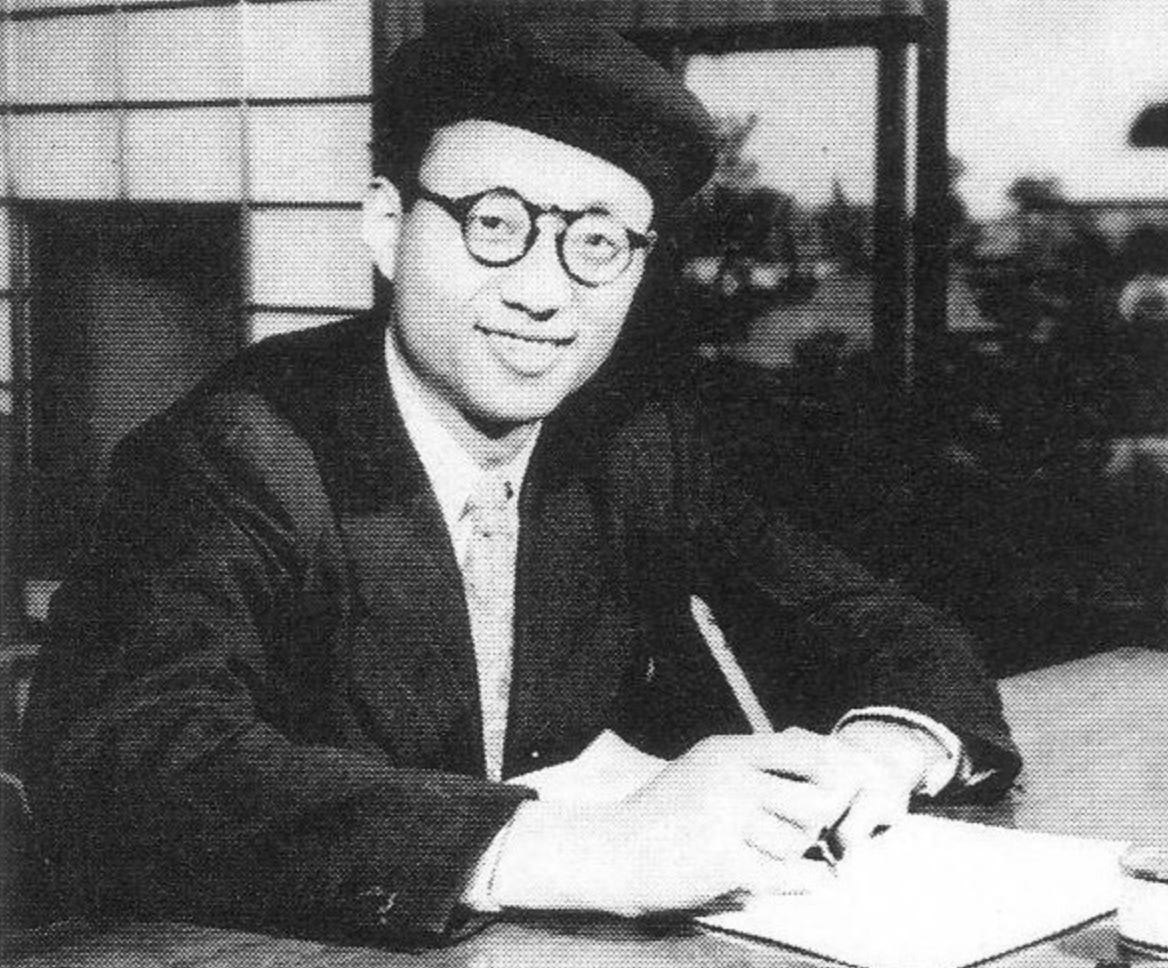
Tezuka Osamu
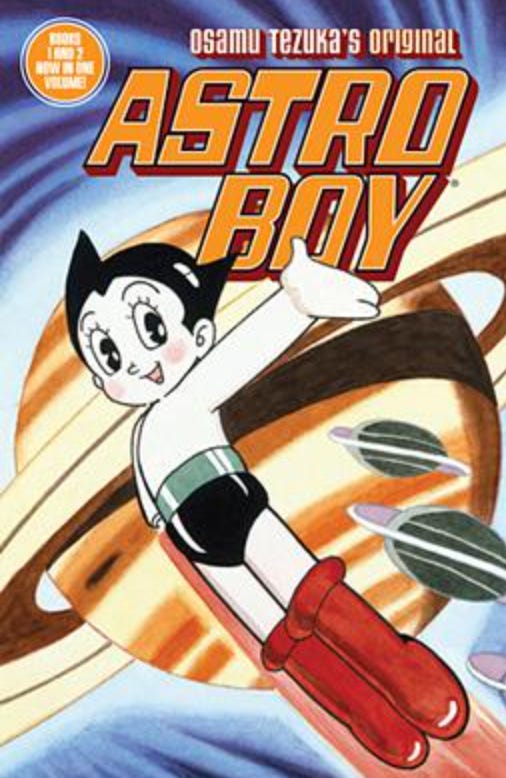
Tezuka’s best-known early achiveement here was the creation of Tetsuwan Atomu (Astro Boy), a friendly boy-robot whose first adventures were published right at the end of the Occupation, in the spring of 1952. He was drawn in Disney contours, with Betty Boop eyes and two hair-spikes modelled on the shape that Tezuka’s own hair took in the bath as a child. He was powered by an atomic reactor in his chest, and boasted jets inside his red boots, searchlight eyes and twin machine guns stashed discreetly in his backside.
Where Batman and Superman were masculine and remote, Atom was cute, androgynous and emotional - a lifeline for children growing up after the war without a father or a brother.
Atom’s journey towards worldwide fame began with his transfer from page to screen in the early 1960s. Japan was so short on animators at this point that Tezuka and his co-workers had to invent workarounds where they couldn’t physically produce enough frames per second.
Static images were pushed around under the camera to create a sense of movement; sometimes, in dialogue scenes, only mouths would be animated. Meeting their first TV deadline, of New Year’s Day 1963, meant working seven-day weeks, with staff sleeping under their desks and skin rubbed so raw that illustrations went out smudged with blood. Later generations of animators blamed Tezuka for setting a pattern here.
Then along came a deal with America’s NBC, and the novelty of Japan sending a cartoon back across the Pacific - at a time when some in Japan had been starting to worry about the Occupation displacing Japanese in favour of American culture, in everything from family values to popular entertainment.
All did not go to plan, however.
Tezuka’s determination to take children seriously sat badly with the NBC producer Fred Ladd, who flew to Tokyo in 1964 to explain the cardinal rule of children’s entertainment in America: nobody dies. A dead body in the street, in one of Tezuka’s episodes, had to be changed to a man who was merely unconscious, in need of a hospital.
This was an easy enough fix, but three entire episodes were judged to be beyond saving altogether. One featured vivisection. A second had a nude painting in it - added as a joke, it seems, by a sleep-deprived assistant. And in a third, a villain left a message etched into the eyeball of Christ on a crucifix.
Tezuka, who had once been beaten up by a group of drunken American GIs and was an opponent of American intervention in Vietnam, wrote that it was strange how Americans were relaxed about violence in the real world but shunned it in fantasy.
But these turned out to be no more than early hiccups. Astro Boy gained a cult following in America and beyond, and across the decades that followed Japanese anime and manga grew and grew. Disney got involved in distribution in the 1990s, helping Miyazaki Hayao’s Studio Ghibli on its way. Then came major worldwide hits like One Piece, Doraemon and Dragon Ball, and the take-up of Japanese visual culture by Netflix and by seemingly every bookshop and toyshop I’ve visited in recent years. The global market for Japanese anime and manga now sits at around $40 billion annually.
Beyond the raw numbers, of course, lies the immense warmth and good will towards Japan that these exports have bought. It would have been difficult to imagine back during the Occupation, when Japan was an international pariah and its reputation seemed likely to be forever associated with the extraordinary brutality of the war, that a turnaround on this scale and of this depth would ever be possible. And yet here we are.
I’ll finish on an anime recommendation, for anyone with a Netflix subscription. Pluto is a dark reimagining of one of the story arcs from the original Astro Boy, created under strict licensing conditions by the manga artist Urasawa Naoki - who just happens to be one of those most concerned about the intrusion of AI into his art-form. A few weeks ago, he launched the first instalment of a new manga on this very theme: The Last Manga Classroom.
I haven’t had a chance to read that yet, but Pluto is well worth your time, connecting the Occupation era with some of the worries - and, who knows, the positive possibilities - of our own times.
My daughter was astounded by Pluto - and the fact that she has been manga obsessed and studio ghibli obsessed since she says before she was born. 🤗so we have watched the first episode and just loved it.
My grandchildren and I are having a Pluto day. They both make mean sushi. We all have berets (Tezuka) in honour of him as the grandfather of all that is Japanese and cartoony. They both love Manga too. Thank you for this article. I had to read it twice once on a FaceTime with them and once for me. I am exhausted now. I will get back to you about the book just released.