


You can find an audio version of this week’s essay here:
Japan’s first female prime minister, Takaichi Sanae, is riding high in the polls and is set to test her popularity in a snap general election.
But has she just made a fateful mistake?
Two weeks ago, she moved into the official Prime Minister’s residence, known as the Kōtei. And it’s no ordinary house…
Soon after it was built, back in 1929, the residence became the scene of some of the grizzliest acts in modern Japanese history.
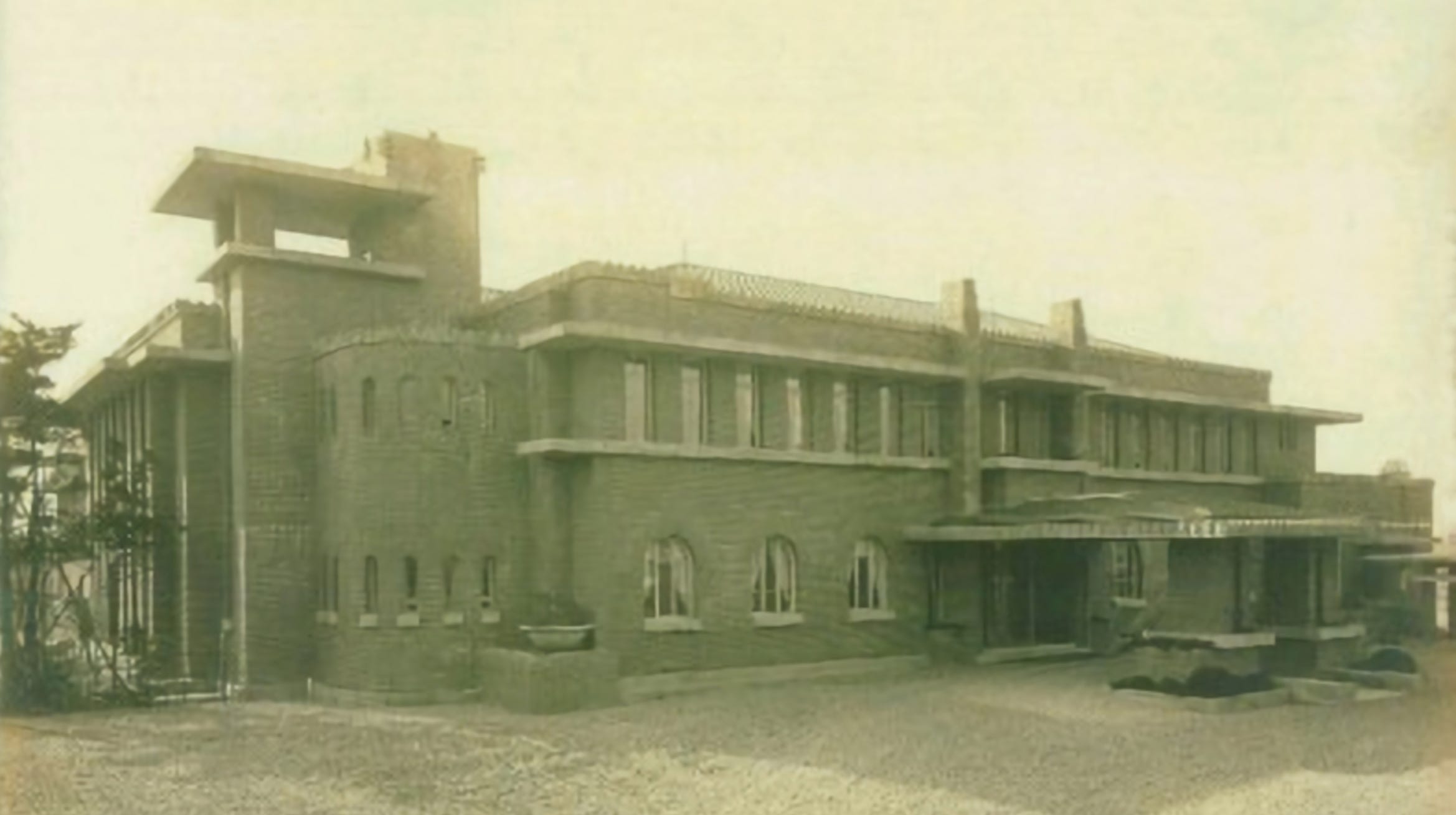
In May 1932, prime minister Inukai Tsuyoshi was at home there, expecting a visit from Charlie Chaplin. Instead, a group of young ultranationalist naval officers turned up, pushing past security and bursting through the doors.
Furious at what they regarded as their country’s corrupt politicians, weak diplomats and grasping corporate leaders, they were determined to spark a national restoration. ‘Make Japan Great Again’ could well have been their motto.
These young officers, many of them no more than twenty years old, had heard that Charlie Chaplin would be at the residence that day. If they could kill him, along with the Prime Minister, the stage would be set for an epoch-defining war with the United States.
Inukai welcomed the men as calmly as he could. He bade them take off their shoes and follow him into a Japanese-style room, where they could talk. This they did – all except one, who rushed into the room with a dagger in his hand.
‘It’s no use talking!’ he shouted. ‘Fire!’
His comrades obeyed, and Inukai was shot to death. The officers fled the scene.
Over the next four years, Japan’s civilian politicians struggled in vain to control rebellious elements in the military. Tensions finally spilled over on 26th February 1936, when more than a thousand soldiers mounted a coup.
Once again, a Japanese Prime Minister was targeted. A group of men, led by Lieutenant Kurihara, made their way to the official residence in the dark of the early morning, through falling snow.
Kurihara put a gun to the back of the guard on duty at the gate, forcing him to open up. Another guard was found asleep, and was quickly disarmed.
Kurihara and his men made their way into the residence, while others outside began assaulting it with heavy machine-guns.
Awoken by the sound of an alarm bell just before 5am, Prime Minister Okada Keisuke was bustled into a bathroom by members of his security team, alongside his brother-in-law Colonel Denzō Matsuo. Somewhere in the residence, rebels could be heard breaking down doors.
Denzō, who bore a striking resemblance to Okada, went to find out what was happening. He was discovered by the rebels and mistaken for the Prime Minister.
One of the men – after a moment’s hesitation, perhaps at the enormity of the moment – shot him in the chest and then in the head.
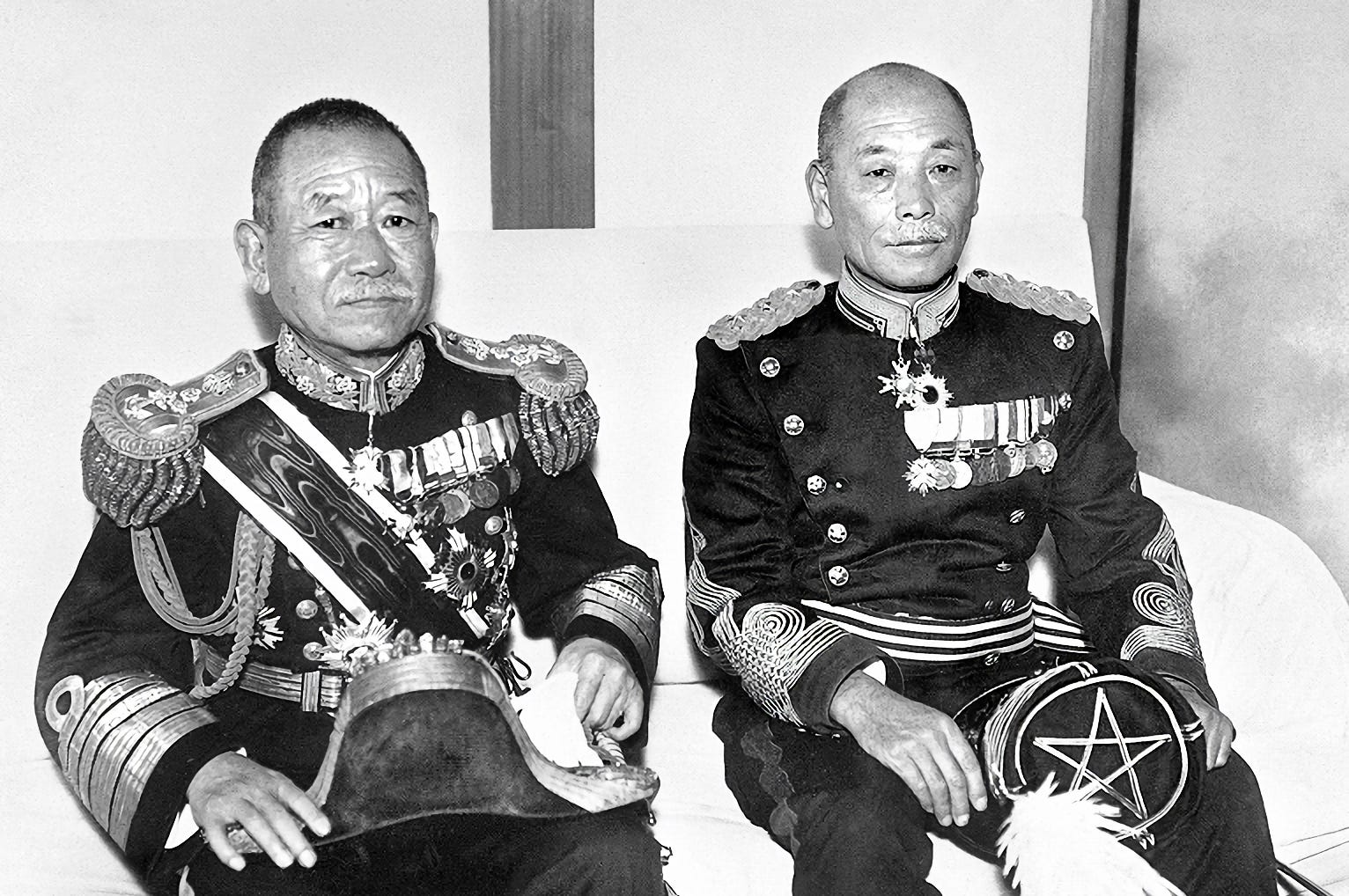
Okada Keisuke (left) and Denzō Matsuo (right)
Okada managed to escape with his life, and after a personal intervention from Emperor Hirohito – in whose name the coup had been staged – what became known as the February 26 Incident was brought under control.
Still, this bleak period of ‘government by assassination’ contributed to the militarization of Japan’s politics and eventually the launching of a devastating war.
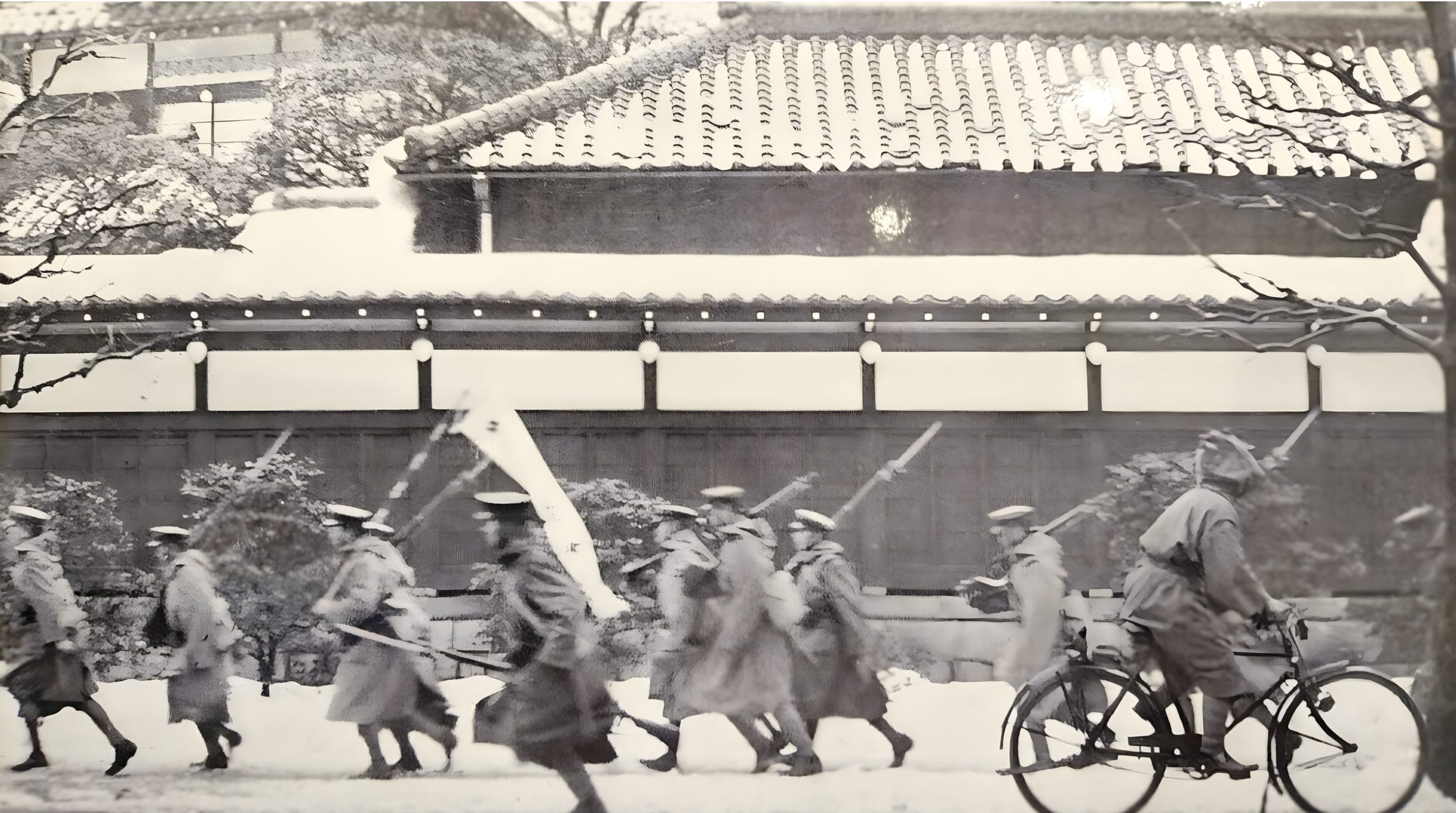
Japanese soldiers during the February 26 Incident
Something of those dark years seems to have lingered at the Prime Minister’s residence. Alongside a bullet-hole in a window, rumoured to date back to the February 26 Incident, run accounts of strange goings-on in the house.
Prime Minister Mori Yoshirō claimed to have seen ghosts in the residence during his time there. At night, he heard doorknobs being rattled and what sounded like the march of soldiers’ feet.
Hata Yasuko, the wife of another prime minister, once looked out into the residence’s garden and saw apparitions of figures dressed in military uniforms.
Abe Shinzō, prime minister between 2012 and 2020, never moved into the residence – prompting critics to ask why taxpayers were forking out around £1 million per year for the upkeep of a home that no-one was using.
Quite why Abe avoided the residence, no-one knows for sure. He claimed that it helped him to maintain a separation between work and private life – the Prime Minister’s residence is joined to the PM’s Office by a short corridor. But his Cabinet was forced to issue a statement in 2013 denying that Abe was staying away from the residence because of its chequered past and ghostly reputation.
Perhaps Abe was worried about a different kind of curse – not so much the house’s bloody past and more the fact that six out of seven recent prime ministers who stayed in the residence lasted only around a year in power. Abe stayed away, and became the longest-serving prime minister in Japanese history.
Takaichi’s decision to risk the residence is said to stem from her husband’s poor health, and her desire to have somewhere where she can participate in caring for him.
But if her approval ratings suddenly tank, or if the election goes against her, people will ask whether the curse of the Kōtei has struck again…
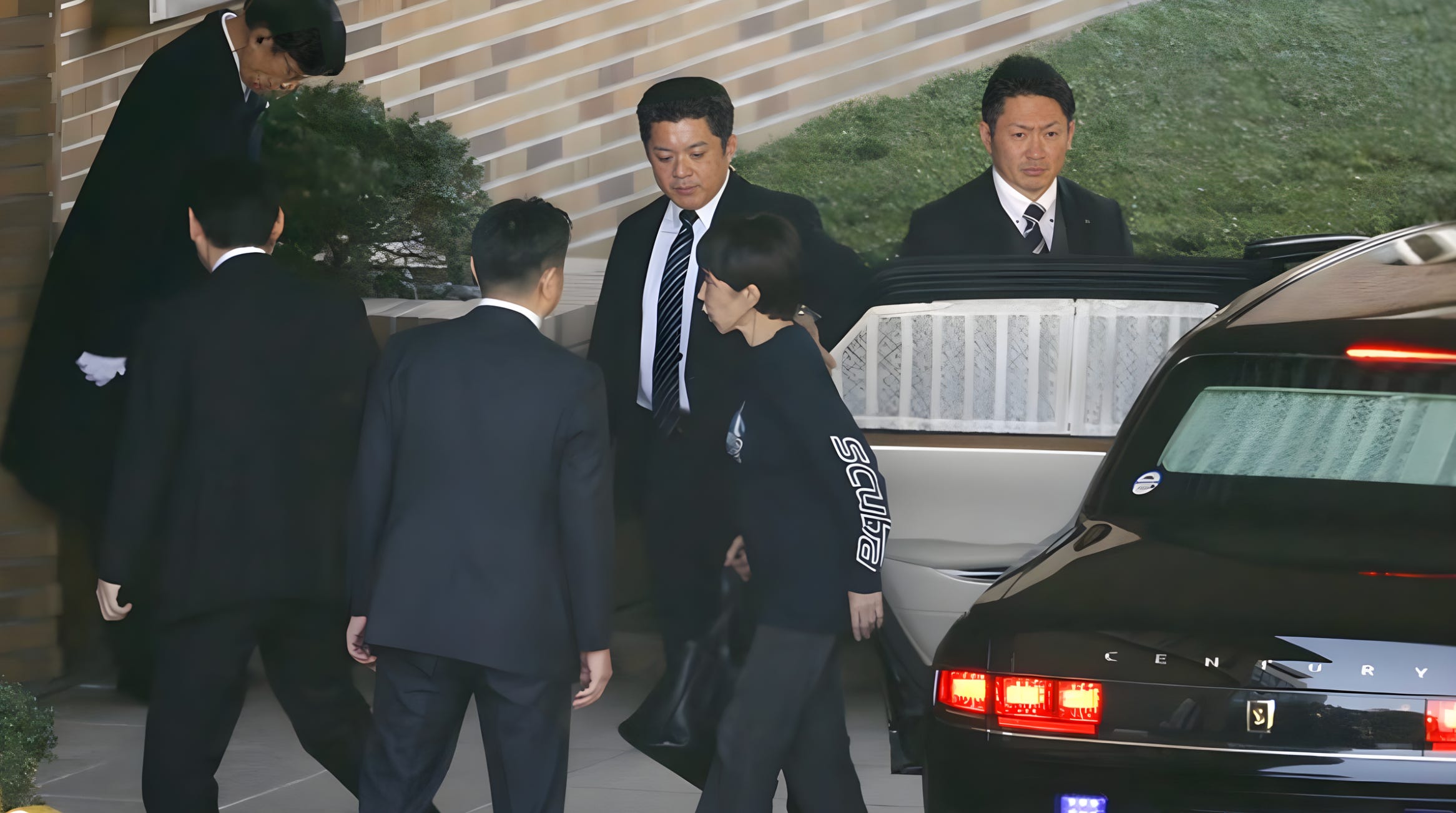
Prime Minister Takaichi moved into the residence in late December 2025
Thank you for reading! If you enjoyed this post, please consider liking it, sharing it with someone or sharing your own ghostly sightings in the comments below.
If you value the newsletter as a whole, you’re very welcome to support the research and writing that goes into it by upgrading to a paid membership or by buying me a coffee… Thanks!
Given that relatively few prime ministers in Japan seem to last more than a year or two, I'm not sure the curse of lack of longevity at the job is that significant. I mean Koizumi was PM for several years and he lived there.
The wife and I, for reasons, recently tried to remember when various PMs in the 1980s/90s were on the job and realized that we can't. Beyond Takeshita being PM for announcing Heisei. Interchangeable wrinkled space aliens in suits for the most part
Let's hope the curse will work this time too!