


A clear emerging theme in Sanae Takaichi’s premiership is a more assertive Japan.
Back in April this year, Japan abolished restrictions that previously limited military equipment transfers to five nonlethal categories: rescue, transport, warning, surveillance and mine-sweeping.
In future, countries with which Japan has a defence equipment and technology transfer agreement – a roster of 17 nations that includes the US, UK and Australia – will be able to avail themselves of Japanese-made missiles, rockets, drones, jets, frigates and eventually electromagnetic rail-guns and laser weapons, which are currently in development.
Lasers, of the type tested in recent weeks aboard the experimental vessel Asuka, are seen as the holy grail of cost-efficient defence against cheap drones.
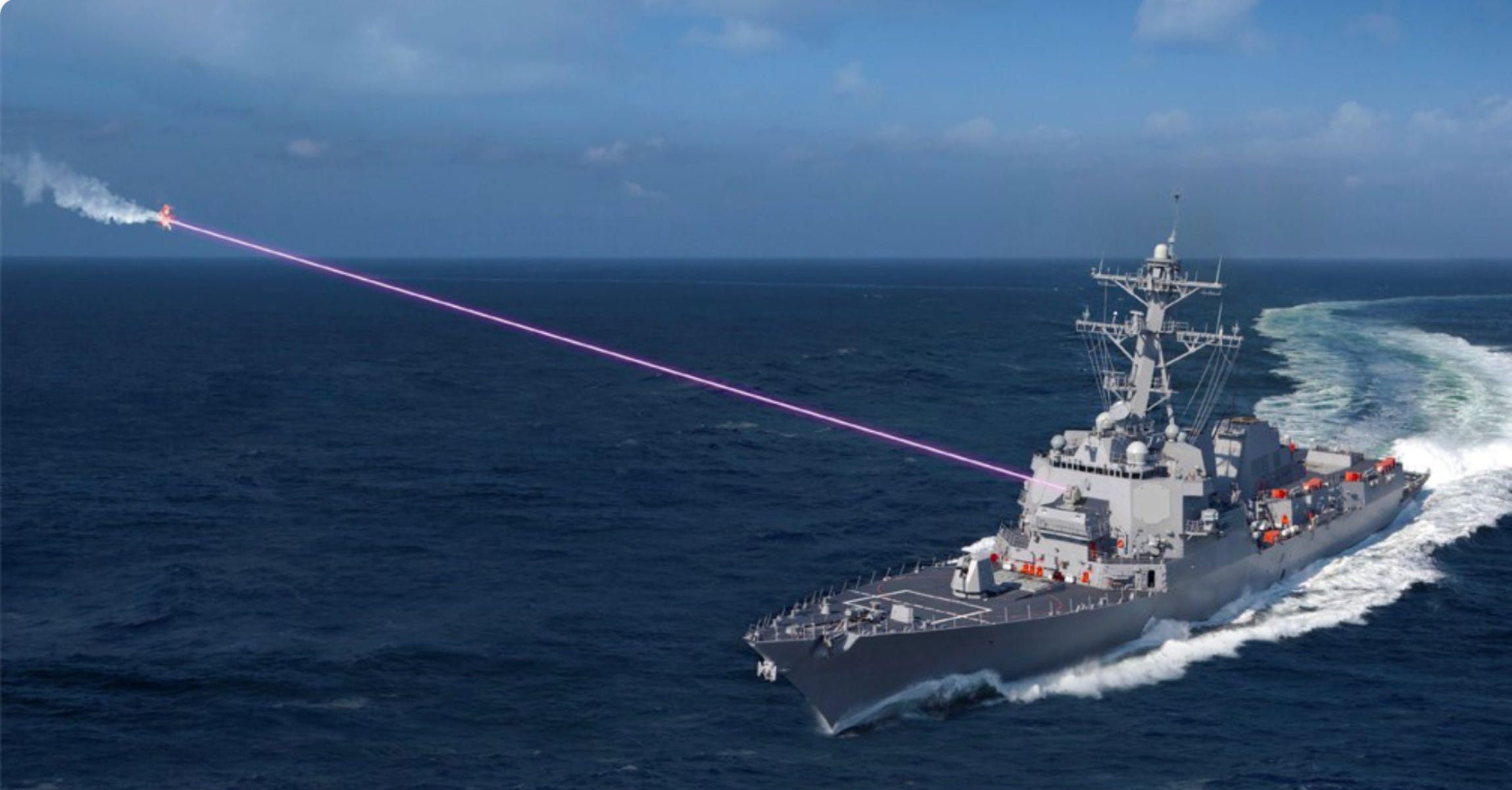
Artist’s rendering of Lockheed Martin’s HELIOS system. Japan is developing a similar weapon
Japan is also part of a collaborative project - involving the UK and Italy, and potentially extending to other countries besides – to build a next-generation fighter aircraft. It is due to come into service around 2035. Who knows what East Asia, and indeed the wider world, may look like by then.
An historic shift appears to be underway, from Japan as a beacon of postwar pacifism to something new, whose nature isn’t yet clear. China often raises the spectre of Japanese ‘remilitarisation.’ And yet what’s happening looks more like the building of ever-deeper links with countries including the Philippines, Indonesia, Thailand, Vietnam and Australia. This is not a return to a dark past - but it’s not without risks either.
People who worry about Takaichi’s latest move ought to worry less about unreconstructed samurai toting laser weapons and take an interest instead in the steady erosion of Japanese civil society across the 1920s and early 1930s.
One of the most important forces launching Japan down the road to true militarism back then was a perceived threat from abroad – the US, China, the Soviet Union – allied to the combined clout in the country’s politics of industrialists, military men, an unaccountable police force, a partially-corrupt judiciary, fearful journalists and weak parliamentarians.
Bit by bit, and under the rhetorical cover of doing what had to be done to save their country, they squeezed the life out of Japan’s fledgling democracy.
Now look at how Prime Minister Takaichi has instituted her new policy on lethal weapons. Not in her manifesto. Not put before parliament. Decided instead at cabinet level – albeit flagged back in 2025 as something Takaichi wanted to do.
The question for the next few years is probably not going to be whether Japan ought to build up its military-industrial base and steadily give its armed forces more legal leeway. It will likely do both – the strategic climate seems to be pointing in this direction. The question is whether Japan’s democracy is robust enough to manage these things in a way that people, in Japan and around Asia, can trust.
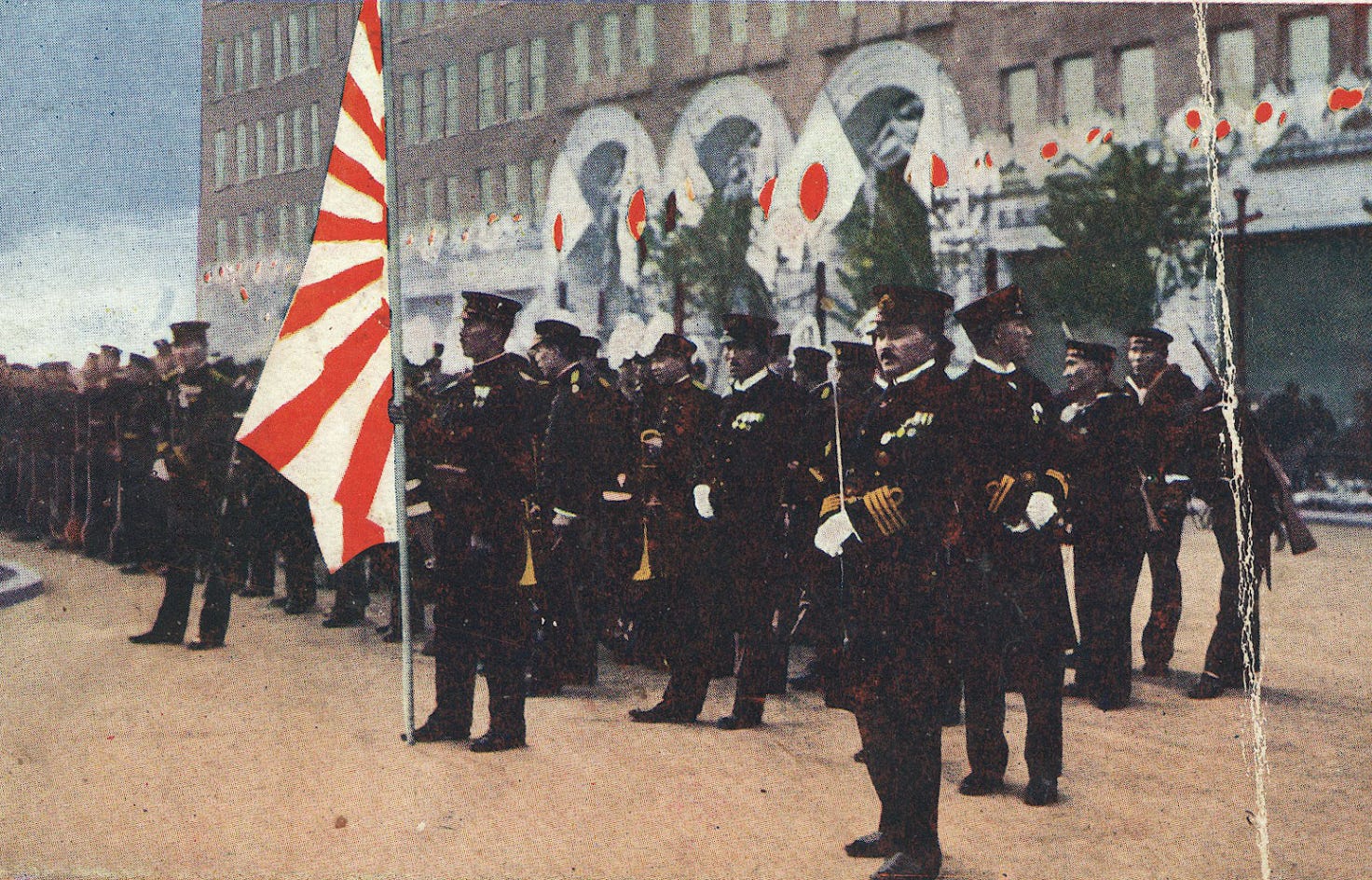
An Imperial Japanese Navy honour guard, 1928
Worth watching is what happens with Takaichi’s far-reaching reassessment of Japan’s national security later this year. It may include the creation of a centralised national intelligence bureau, to replace Japan’s existing and fragmented system. Takaichi also plans to launch what some are calling a ‘Japanese CIA’: a foreign intelligence service and training school.
Critics charge that these organizations, together with new cybersecurity initiatives, are developing faster than any associated plans for civic oversight. These are essential for guaranteeing the upholding of the constitution on things like the right to privacy.
Add to this mix the building of a defence industry reliant on export contracts and you have a recipe for foreign policy being made in murky, self-interested semi-darkness.
Public opinion has been softening for some time on the Self-Defence Forces, which were once suspected of being an incubation phase for a future Japanese Army. The prominent role of the SDF in disaster relief back in 2011, and any time Japan has a serious earthquake, has helped to build a degree of affection.
But that does not mean that people would necessarily support an SDF with improved offensive capabilities and the legal license to use them.
There is meanwhile strong opposition in Japan to Takaichi’s lifting of restrictions on the export of lethal weapons.
Developing more robust forms of self-defence and even deterrence is one thing: people in Japan are not naïve about the potential threat posed by China and North Korea. Setting out to make money, even indirectly, from the prosecution of wars around the world is a very different proposition. It far more obviously offends against the history and morality of postwar Japanese pacifism.
It may also be bad for business, in particular those whose profits depend on Japan’s global reputation as a peaceful and civilised place - from tech and games companies to the country’s burgeoning tourist industry. They may become part of a new post-pacifist coalition, which accepts that those sunny postwar decades are not coming back but seeks to carry their best peace-loving qualities into the future, as part of a set of meaningful ‘Japanese’ values.
Japan’s original pacifist generation is dying out, and the old coalition led by leftists and students looks unlikely to reform. Civil society organisations like the Network Against Japan Arms Trade have seen their memberships falling in recent years. But their younger replacements include well-networked NGOs with good access to the media, some of which may end up partnering with businesses worried about reputational vulnerability.
The activities of these civil society groups, in shaping the thinking of the electorate while holding power meaningfully to account, will be essential over the years to come. Japan’s role as a beacon of pacifism may be coming to an end. But a worthy replacement would be for it to lead the way in showing other prosperous democracies how to engage in responsible military spending, geared towards defending their vision of how the world ought to work.
A longer version of this article first appeared in UnHerd.
—
Images
HELIOS: Interesting Engineering (fair use).
Imperial Japanese Navy honour guard: Old Tokyo (fair use).
A good overview, especially with the focus on political side of rearmament both domestically and abroad.
The militarization and, particularly, the arms sales are not things that concern me about Takaichi. In many ways I think they are necessary to respond to Winnie the Flu's pushiness wrt Taiwan.
OTOH the arguments for why are not being made clearly, which is I think a mistake and has the potential to cause domestic issues as and when opposition happens