


It’s almost a rite of passage for first-time visitors to Japan to enjoy the tatami mats and hot springs of a ryokan - a Japanese inn - only to be confronted the next morning at breakfast with a shock-and-awe attack on their digestive systems.
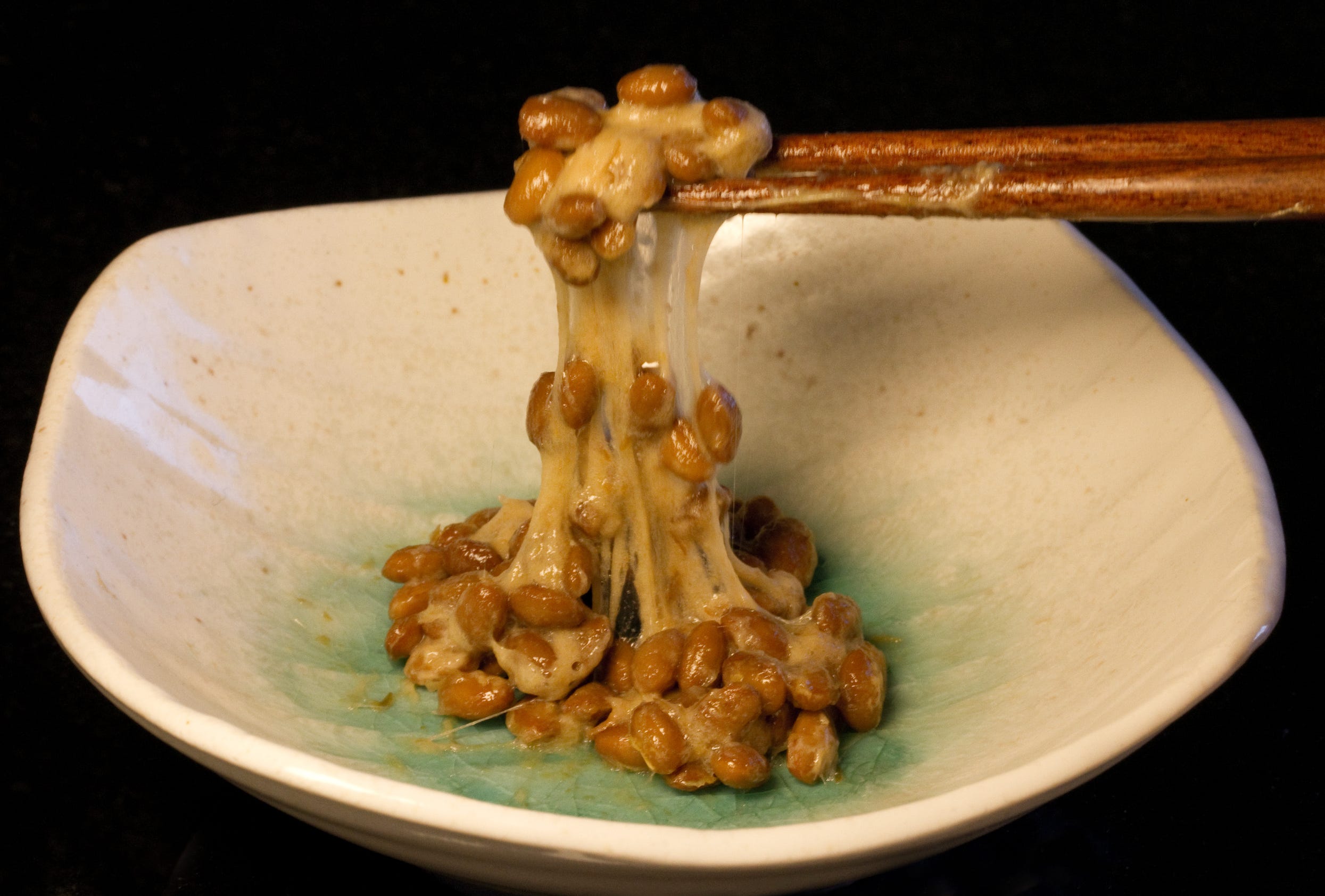
Lifting the lids on an array of little ceramic pots on my breakfast tray, many years ago, I had no idea what I was looking at. But strangest and most daunting of all was nattō: soybeans that have been left to ferment until they go slimy and gloopy.
It’s said that you should let someone try haggis before telling them what it is. Few people offered the chance to eat mashed-up sheep organs stuffed inside the poor animal’s stomach are going to rush to say yes. But haggis at least has a vaguely anonymous look on the plate. As soon as you start mixing your nattō, and lifting a few beans out of the polystyrene tray on the end of your chopsticks, there’s really no disguising what you’re up against.
And yet, for readers who’ve been to Japan or who live there now: I bet you eventually came to love it…
In the Harding family, the price of a bicultural upbringing for our children includes scandalously inflated costs for imported food - including nattō. And we’re clearly not alone. While the consumer market in Japan last year topped an extraordinary 300 billion yen – getting on for $2 billion - it’s now doing big business around the world, too: a much-vaunted superfood, just like its fermented friend, kombucha. Japanese exports tripled between 2017 and 2025, reaching more than 5,000 tonnes. How did this happen?
People in Japan have probably been eating nattō since the 8th or 9th century – but not as we know it now. Shiokara nattō - salty, dark, non-sticky beans fermented with kōji mould - arrived in Japan from China, and came to be associated with Buddhist temples.
The other type was itohiki nattō – literally ‘string-drawing nattō.’ This is the bacterial breakfast with which you may have done battle in the past, and we only have good evidence of it being eaten in Japan from the early fifteenth century onwards.
The best - and hence probably unlikeliest - origin story for modern nattō lies with the famous 11th-century warrior Minamoto no Yoshiie. On campaign in north-eastern Japan, he’s said to have discovered that a bundle of boiled soybeans, intended as horse feed, had been poorly packed and had begun to go bad.
When the rice-straw wrapping was peeled away, the beans were revealed as sticky and slightly smelly. The packaging, rather than the neglect, would have been the key here: rice straw is home to the all-important Bacillus subtilis.
Summoning all his samurai courage, Yoshiie waited until some of his men had tried the slimy beans first - and survived - before risking them himself. Eventually, he scooped a handful into his mouth, and declared them good.
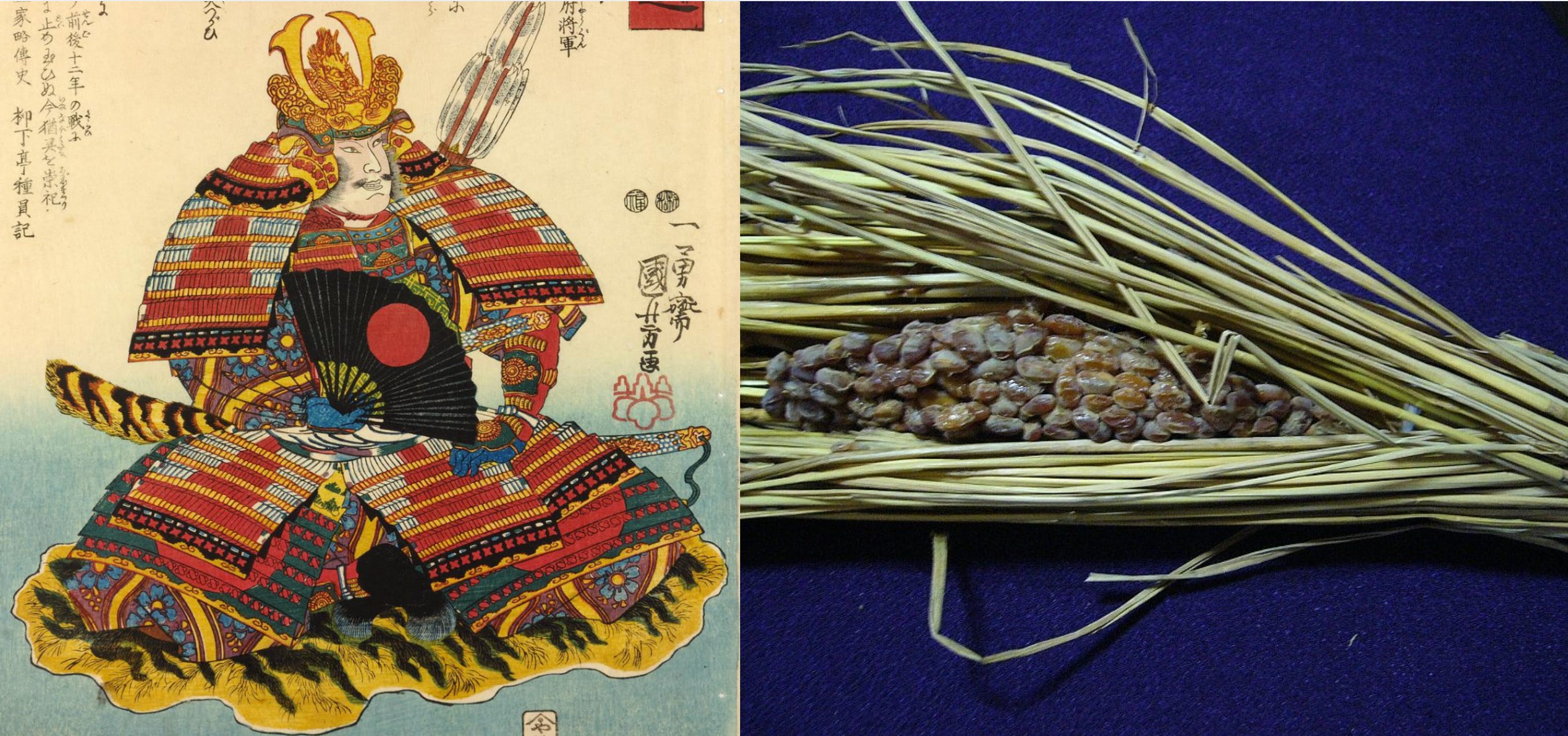
Minamoto no Yoshiie meets a fearsome foe - but is nattō afraid of it…
In yet another example of how much contemporary Japan owes to the Tokugawa period (1603-1868), many a citizen of the great city of Edo used to awake to the sound of nattō vendors calling out their wares.
Some Edoites put nattō in soup. Others chopped it up with vegetables and tofu. Over time, today’s winning combination emerged: soy sauce, mustard, and the placing of nattō on rice.
Since then, the innovations have kept on coming. The very first Japanese trains, towards the end of the 19th century, must have reeked of the stuff now and again, as people bought nattō in rice-straw packages to offer as gifts.
20th-century breakthroughs included refining the way that bacteria can be made to act on soybeans, in order to produce the perfect – or perfectly divisive – Japanese breakfast. The microbiologist Hanzawa Jun developed a hygienic production method using pure-cultured nattō bacteria and clean wooden containers, so that rice straw no longer had to be used. Later work refined the process even further, so that the smell wasn’t quite so overpowering for diners.
Even the snap-off polystyrene box lids on nattō have been carefully engineered, to ensure they work precisely as they should.
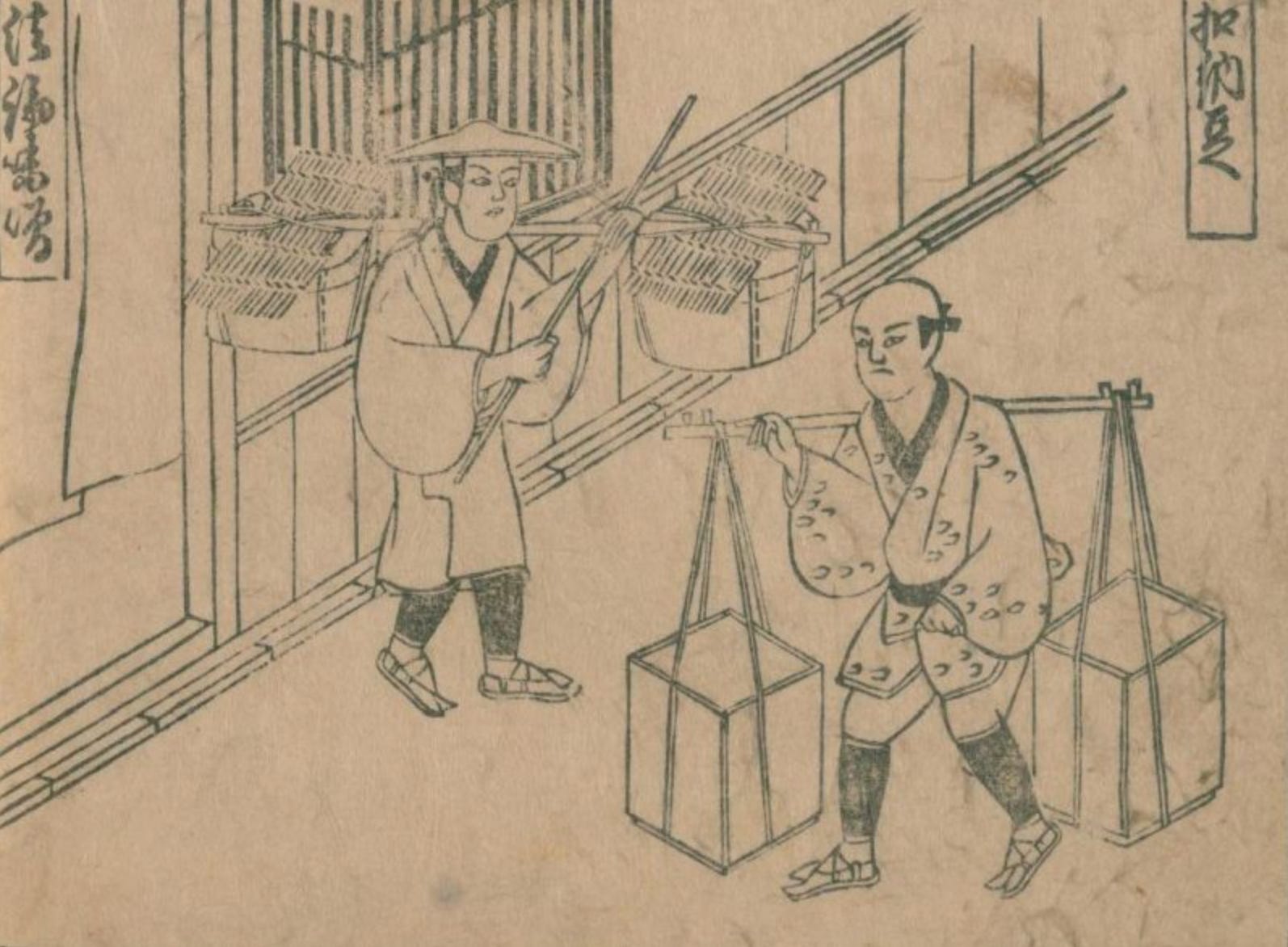
A nattō seller (on the right), featured in an illustrated encyclopaedia called Jinrin kinmō zui (1690)
The health benefits of nattō are meanwhile less mythical than its Minamoto origins. It’s packed with protein and fibre. And it doesn’t just give your stomach a run for its money in the morning: early clinical evidence suggests that it may actually improve your gut microbiome – something increasingly promoted, at least in the UK, as essential to good health.
If you’ve learned to love nattō and are now approaching connoisseurship, the classic advice is to stir it 424 times before tucking in: 305 stirs, followed by another 119 after adding the soy sauce.
These wonderfully precise numbers are often attributed to the 20th-century artist and epicure Kitaōji Rosanjin. He certainly advocated strenuous stirring, with the soy sauce added just a few drops at a time and the mustard at the very end.
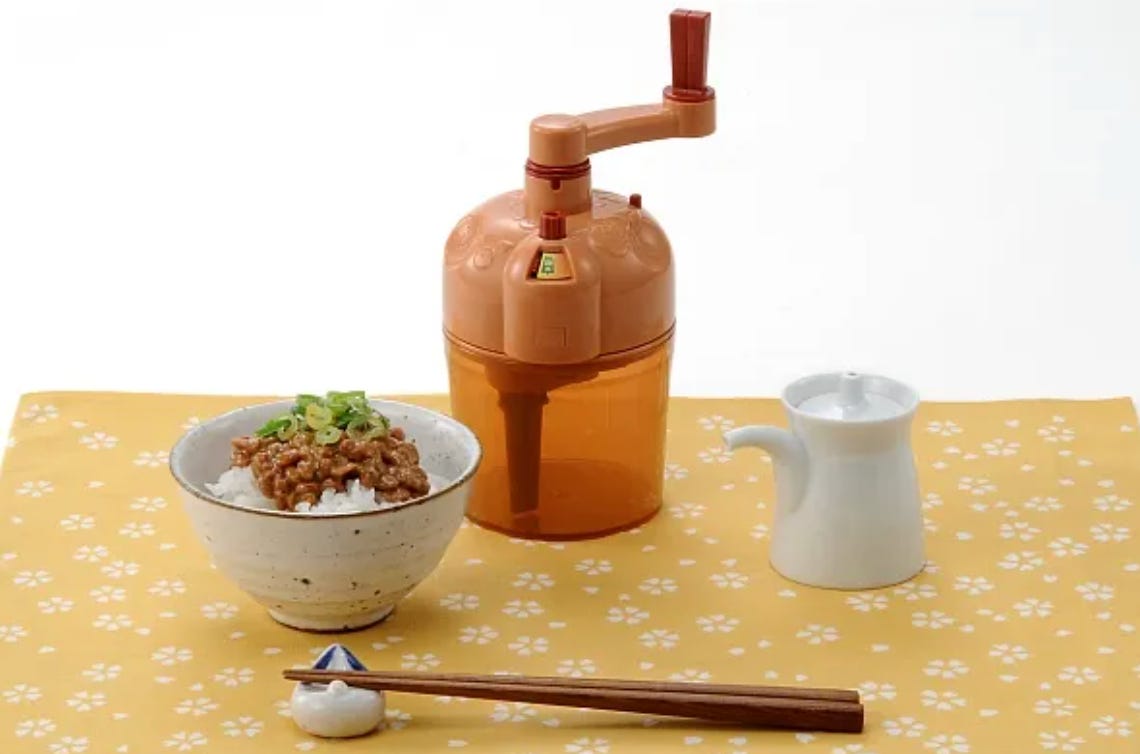
But the 305-plus-119 formula seems to have fermented online before being taken up and tested by the toy manufacturer Takara Tomy Arts. In case you’re already starting to think about Christmas presents, let me leave you with its hand-cranked nattō-stirring machine - designed to produce that perfect, deliciously slimy result every time…
Thanks for reading! Feel free to share your divisive views about divisive foods in the comments below... And do like and share if you’ve enjoyed what you’ve read.
—
Images:
Nattō and chopsticks: Wikimedia (public domain).

Utagawa Kuniyoshi, Hachimantarō Minamoto no Yoshiie, c. 1850: Wikimedia (public domain).
.jpg)
Nattō wrapped in straw: Wikimedia (public domain).

Nattō seller: National Diet Library of Japan (public domain).
Hand-cranked nattō stirring machine: SoraNews24 (fair use).