


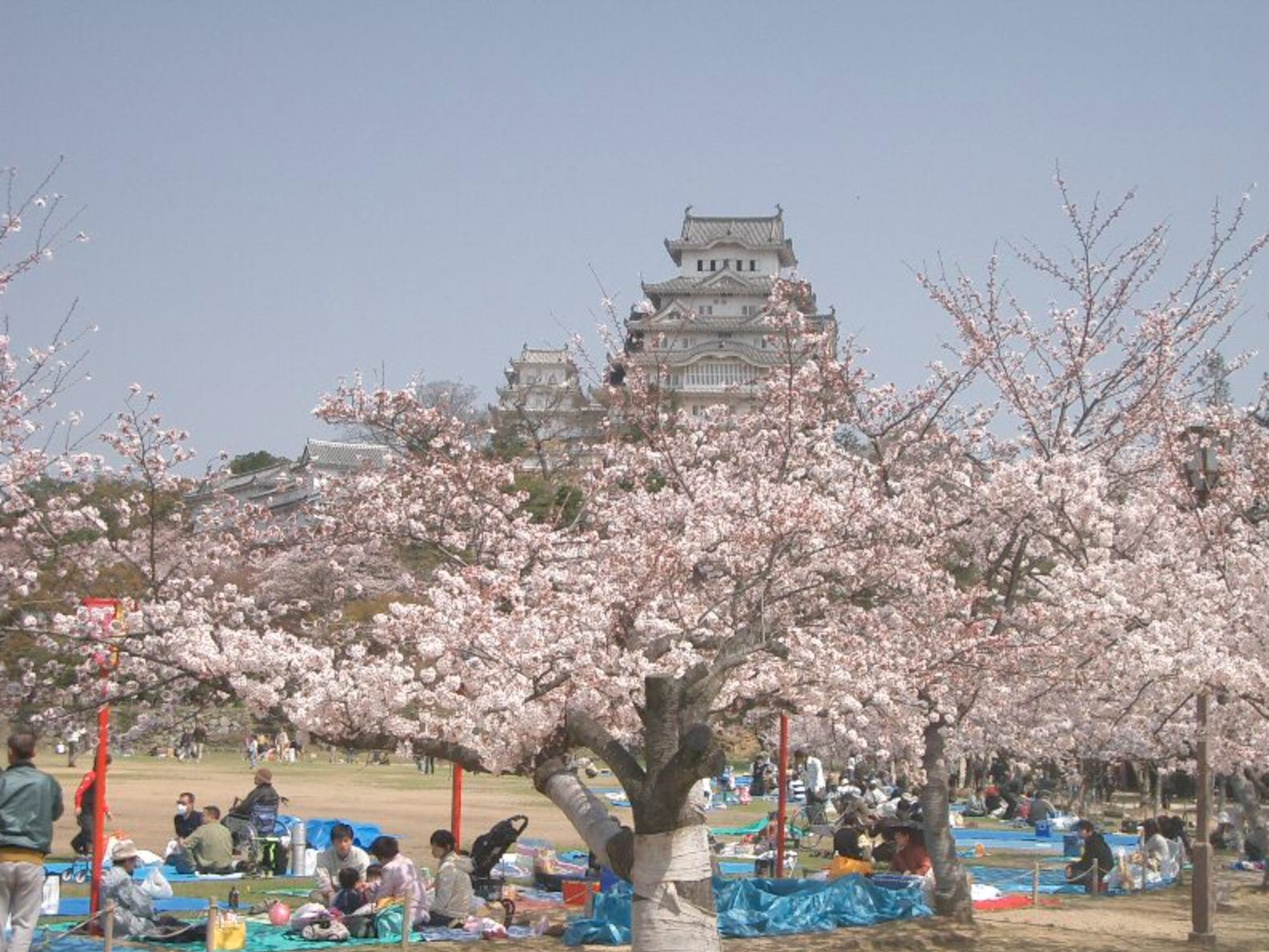
It wasn’t that long ago that as a new company employee in Japan you might be required by your boss to go and camp out in a garden or park for a couple of nights, to reserve a cherry blossom-viewing spot for your elders and betters.
That doesn’t happen so much anymore - ah, the good old days…! But cherry blossom season, soon to be upon us, remains as significant as ever.
But what is that significance? And what should we make of the beautiful gardens in which those cherry trees are sometimes planted? What do they tell us about Japanese ideas of beauty, relaxation, good and bad fortune?
I’m going to explore all this in my next two posts. This week, we’ll go strolling in the sort of garden that Murasaki Shikibu would once have enjoyed, more than a thousand years ago. Next week, we’ll get into Zen gardens, cherry blossoms and one of the UK’s top Japanese gardens: Kyoto Garden, in London’s Holland Park.
To truly live the good life in the Heian era - Japan’s classical hey-day, from 794 to 1185 - you ideally wanted to be a member of the nobility, living in a mansion built in the glorious shinden style.
This was a complex of rectangular wooden buildings, most of them just one storey high, connected by covered walkways. To help cope with hot and humid summers, they might use overhanging rooves of bark to create shady verandas, alongside raised floors to allow cooling air to flow underneath. So that aristocrats could switch easily between party time and private time, rooms often featured slidable or removable screens.
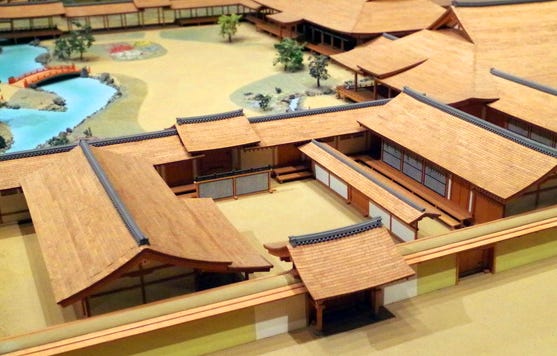
Model of the Heian-era Sanjō Palace in Kyoto (National Museum of Japanese History).
As a noble lord or lady, you wouldn’t be getting your hands dirty in a garden. You would employ someone, and you’d want to make sure they owned a copy of Sakuteiki: Records of Garden-Keeping (11th century) - probably the oldest gardening book in the world.
In its pages, your ancient Japanese Alan Titchmarsh would learn that the main feature of a garden is its pond. Two streams of water must flow into it: one to feed the pond itself, the other to flow into a waterfall constructed from rocks artfully collected on top of a hill at the centre of the pond.
Your gardener would have to plan this water-flow with the utmost care, so as not to bring bad luck upon you, his employer. He’d need to understand Chinese geomantic ideas about guardian spirits associated with the four directions:
Seiryū the Blue Dragon was guardian of the East, symbolising spring, rebirth and growth.
Byakko the White Tiger was guardian of the West, representing autumn and protection.
Genbu the Black Tortoise was guardian of the North: winter, endurance and mystery.
Suzaku the Vermillion Bird was guardian of the South: summer, fire and spirituality (Heian-kyō’s most famous street, on a north-south axis, was named after Suzaku).
The east was the source of purity, and the west the outlet for impurity, so streams in gardens would be dug to flow either from east to west or from north to south. In the words of the Sakuteiki: ‘the waters of the Blue Dragon shall follow the path of the White Tiger.’
Once the direction of water flow was sorted out, rocks, trees and shrubs could be artfully combined to suggest miniature versions of impressive real-life vistas somewhere in Japan or China: mountains, waterfalls, valleys and seascapes.
The effect could be heightened by thinking carefully about where someone viewing the scene would stand. Using larger rocks or trees in the foreground, compared with those in the background, helped to create a sense of distance in the garden.
A really clever gardener would create an entire journey, planning a guest’s path through - on beaten earth or stepping stones - so that they would encounter particular features at particular points.
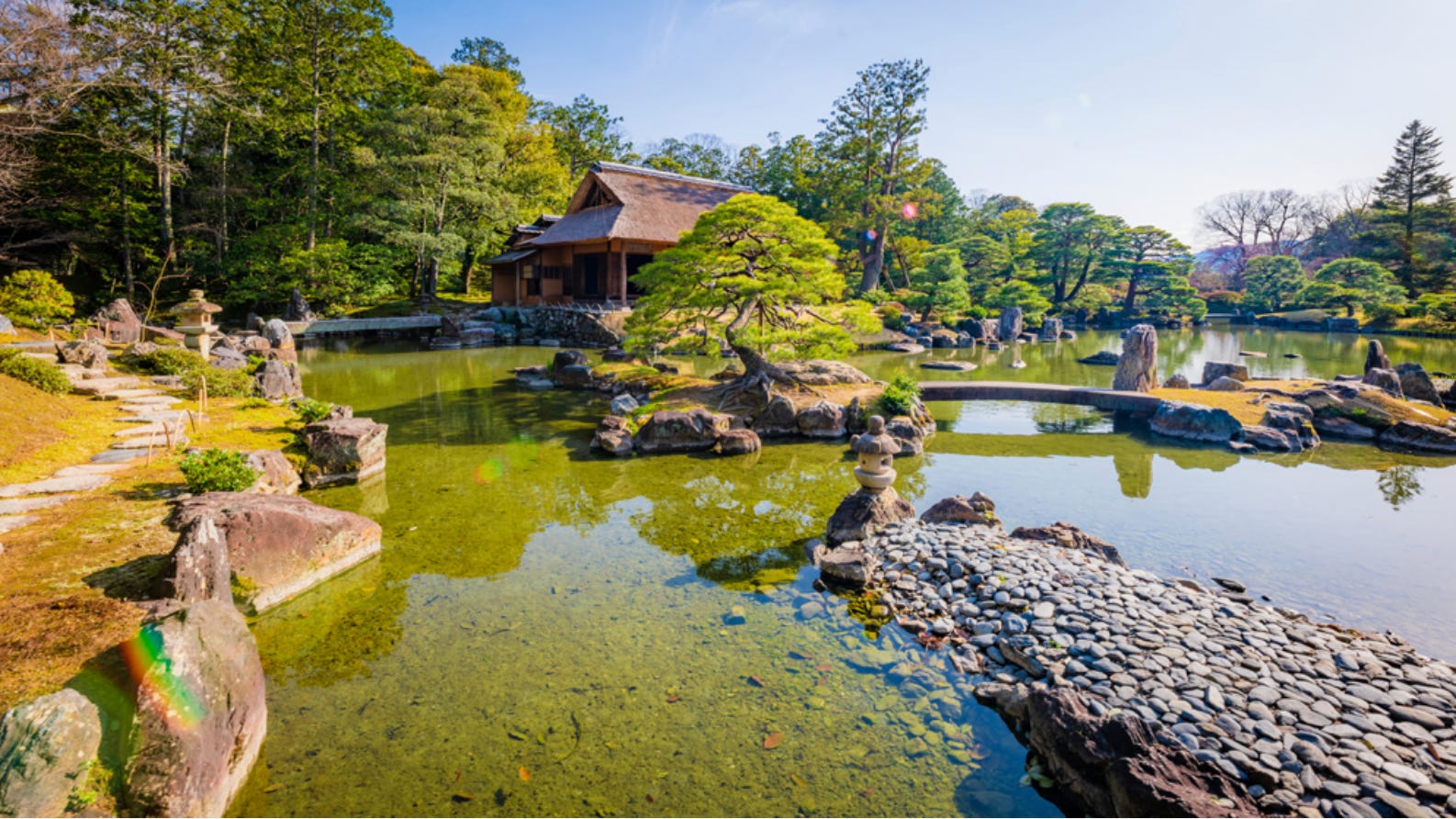
Katsura Imperial Villa, Kyoto
The most valuable rocks were found in nature rather than hewn to order, and those of real distinction were given names. There are stories, in a later era, of samurai stealing famous rocks from one another’s gardens.
You, or you gardener, must then be careful to use the rock in the way that it was originally found. Taking a reclining rock and using it in an upright position, or vice versa, would result in a ‘phantom’ or ‘cursed’ rock.
Trees, meanwhile, were often chosen for their symbolism. Pines represented endurance: evergreen and able to withstand even the strongest winds, twisting rather than breaking.
Rather than the symmetry that came to be prized in Europe - at places like Hampton Court, for example - Japanese gardeners strove to achieve a sense of charismatic imperfection, placing objects off-centre or else staggering them (an effect known as ‘geese in flight’).
The power of suggestion was important, too. Rather than show your viewer everything, ideally you would give them a little to work with, plus some open space, and allow their cultured imaginations to do the rest.
The final touches to your new garden would be ornamental: flowers and stone lanterns, bridges and fish. Perhaps a tea-house, too. With a large enough pond, you could arrange for party-goers to go boating.
There would be poetry, song and no doubt some romance, too, at these parties. Grassy areas could be sprinkled with a little white sand, so that they glittered in the moonlight. Guests might send small cups of sake bobbing precariously along one of the streams, from pourer to drinker.
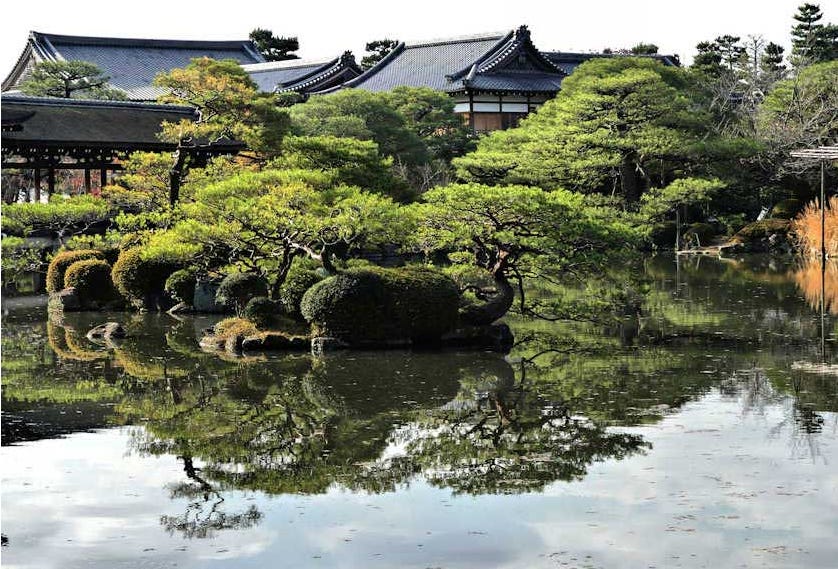
Seiho-Ike Pond, at the Heian Shrine in Kyoto
Towards the end of the Heian period, gardeners began to find their aristocratic clients asking for something new.
Many of those clients had always been worriers, paying Buddhist priests for charms, talismans and rituals to keep them safe from harm, and out of the clutches of their enemies.
Now, some of them were becoming interested in Buddhism’s ‘Pure Land’ teachings. These were based on the idea that the world was going badly wrong, and that in order to be saved one had to call on the name of Amida Buddha. He would grant you rebirth in his Pure Land after death.
Late Heian-era writers who wrote vividly about the magical wonders of this Pure Land inspired the creation of ‘paradise gardens’ connected to noble homes.
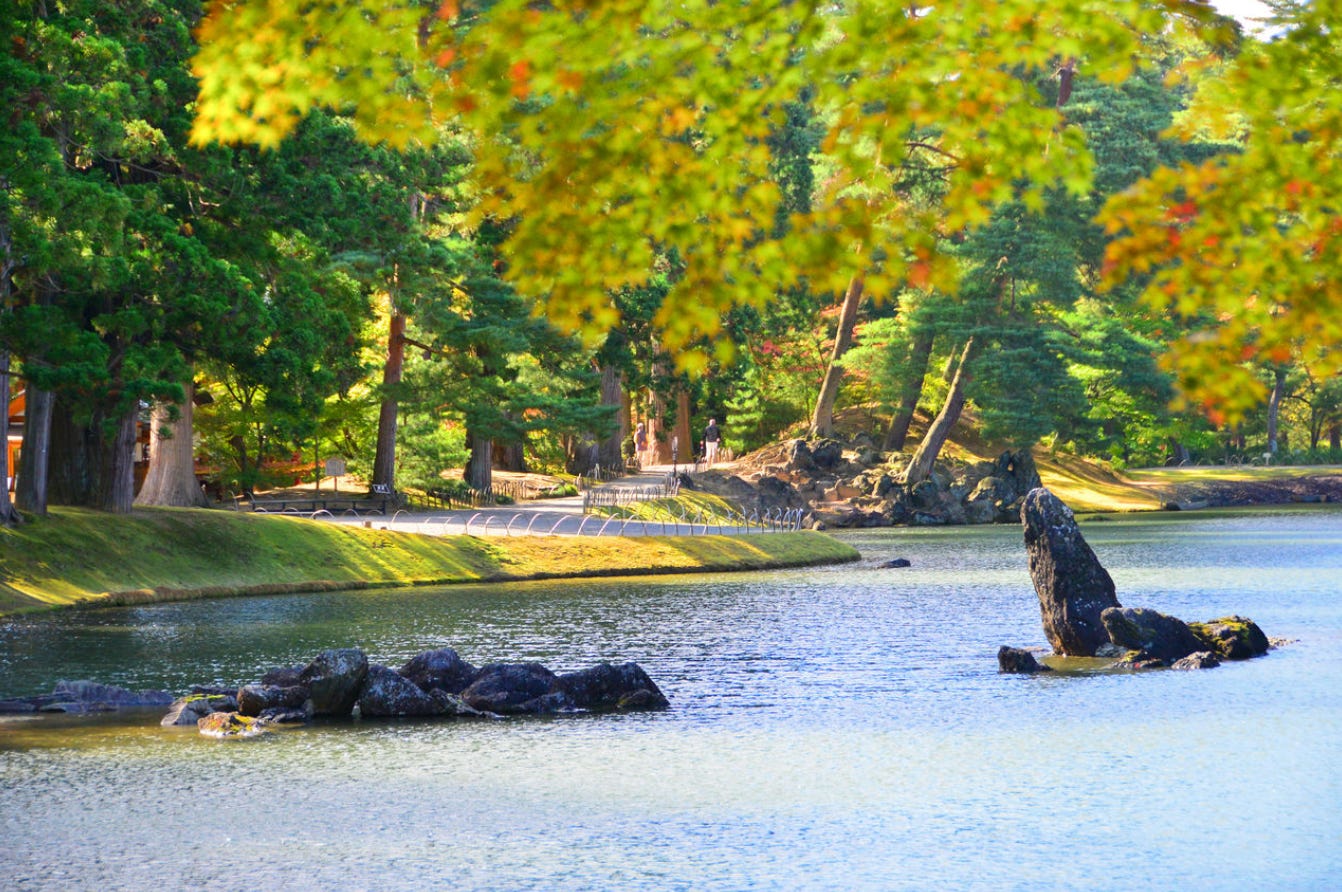
A pond in the Pure Land garden at Mōtsūji temple in Iwate Prefecture
Unusual plants and animals were sometimes used in these gardens, to conjure the strange beauty of the next life. Symbolic plants were installed, too. The lotus flower was especially popular. It grows in mud, yet rises up into beauty - just as we human beings aspire to marvellous things, even from our humble beginnings and natures.
A good, optimistic note on which to end. Next week: Zen gardens, cherry blossoms and London’s best shot at a Japanese garden.
If you’re enjoying this so far, I always appreciate a like (via the heart button), a share and even a comment!
—
Images:
Cherry blossom viewing at Himeji Castle: Wikipedia (fair use).

Model of the Heian-era Sanjō Palace in Kyoto: National Museum of Japanese History: Wikimedia (visitor photo).

Katsura Imperial Villa, Kyoto: Travel Caffeine (fair use).
Seiho-Ike Pond: Japan Experience (fair use).
Paradise Garden at Mōtsūji: Nippon.com (fair use).
Oh fascinating! I learned a lot like about the garden guardians (and cursed rocks… will be careful not to flip any over by accident ha). Have you been to Takamatsu’s Ritsurin Garden? They were famous for sending gifting (aji-ishi) and pine. One of the most beautiful gardens I’ve been to in Japan!
Well done! For those interested in reading about life in such a compound, the brief Diary of Lady Murasaki offers an intriguing glimpse.