


*** If you live near London you might be interested in a talk I’m giving at the Royal Asiatic Society in early January, about the first century of contact between Japan and the West. There’s a reception afterwards and it would be lovely to see you there. More info HERE ***
The sending of provocative signals from the top of government in Japan is starting to look like a habit. Last month, Prime Minister Takaichi landed herself in hot water by suggesting that Chinese action against Taiwan might trigger a military response from Japan. Now, an anonymous source inside the Prime Minister’s Office has suggested that Japan may need to acquire nuclear weapons - because ‘in the end, we can only rely on ourselves.’
Chief Cabinet Secretary Minoru Kihara, who holds one of the most senior roles in the Japanese government - a little like the White House chief of staff and press secretary rolled into one - was quick to disown that point of view. It’s damaging nonetheless, at a time when Japanese diplomats are struggling to repair relationships with China.
Then again, Taiwan and nuclear weapons are real and important questions for Japan - and both security thinking and public opinion show signs of shifting.
Japan’s stance on nuclear weapons has long been more complex than people tend to think. The well-known official line is that as the world’s first and so far only wartime victim of nuclear weapons, at Hiroshima and Nagasaki, Japan’s role is to campaign against them. This stance is one of the foundations of Japan’s pacifism and it’s global moral authority, to some extent balancing out memories of how its armed forces conducted themselves during World War II.
One of the people most closely associated with this policy was Eisaku Satō, prime minister of Japan between 1964 and 1972. He set out Japan’s three ‘non-nuclear principles’: it would never produce, possess or permit nuclear weapons on its soil. He signed the Non-Proliferation Treaty (NPT) in 1970 and picked up a Nobel Peace Prize for his efforts in 1974.
But Satō was also a realist. He negotiated a secret agreement with President Nixon to allow the US to bring nuclear weapons into Okinawa in an emergency, after Okinawa was returned to Japanese control in the early 1970s. And he commissioned a study to assess the feasibility of Japan acquiring nuclear weapons of its own. The conclusion: technically doable, but with diplomatic and economic costs that were unthinkably high.
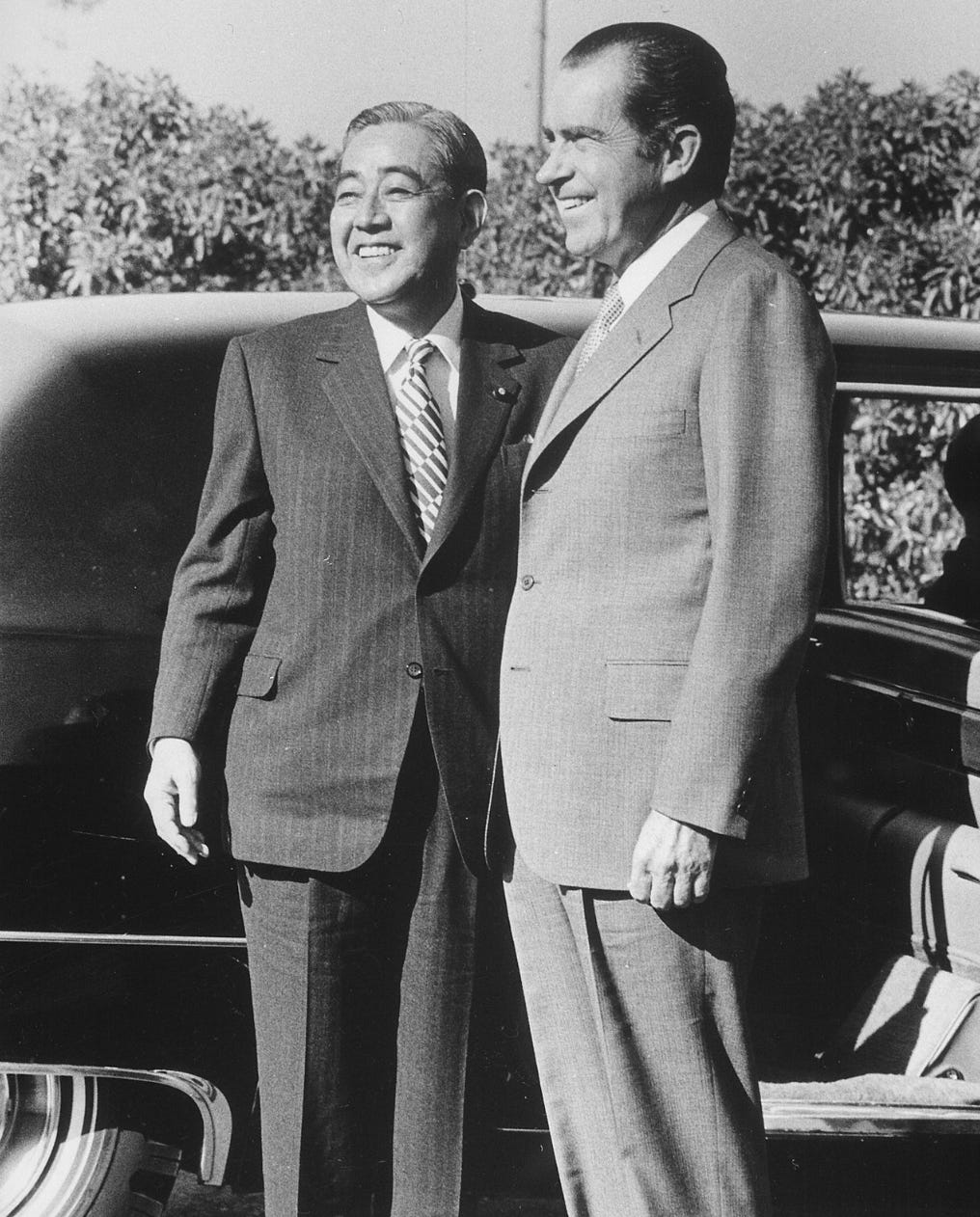
Eisaku Satō and Richard Nixon negotiated the return of Okinawa to Japan in the early 1970s
On and off, over the decades since, people in favour of revising Japan’s pacifist constitution have raised the possibility of the country acquiring an independent nuclear deterrent. But those diplomatic and economic costs have remained high. Japan would have to leave the NPT. Its moral standing on the issue would be shredded. South Korea might decide to follow suit, and perhaps Taiwan, too - with consequences for the region that can only be guessed at. The financial outlay meanwhile remains truly daunting, particularly when Japan’s economy continues to struggle and it is having to spend heavily on conventional defence.
Three things are now beginning to change this calculus.
First, the likelihood has increased that the American nuclear umbrella under which Japan has sheltered all these years might one day soon be snatched away. Donald Trump has been outspoken about US allies freeloading for their defence, and America’s latest National Security Strategy names Japan as one of the countries required to do more. It seems highly plausible that whoever succeeds Trump as president might stick to a similar style of semi-isolationist and transactional politics. Even if they don’t, could any president truly reverse America’s relative decline and meaningfully contain China’s rise?
Second, North Korea now possesses missiles capable of hitting every part of the continental United States. Some analysts believe that the country’s scientists have mastered the techniques required to fit them with nuclear warheads (a difficult feat for long-range missiles).
The potential cost to the US of defending Japan has thereby gone up dramatically. People already wondered whether, should an East Asian conflict involving China break out, an American president would be prepared to risk Los Angeles in order to defend Tokyo. There is a certain amount of faith in the US that China’s leaders would not allow any conflict to reach such a point - China is, after all, a successful country, competently led and with a lot to lose. The same things cannot be said of North Korea.
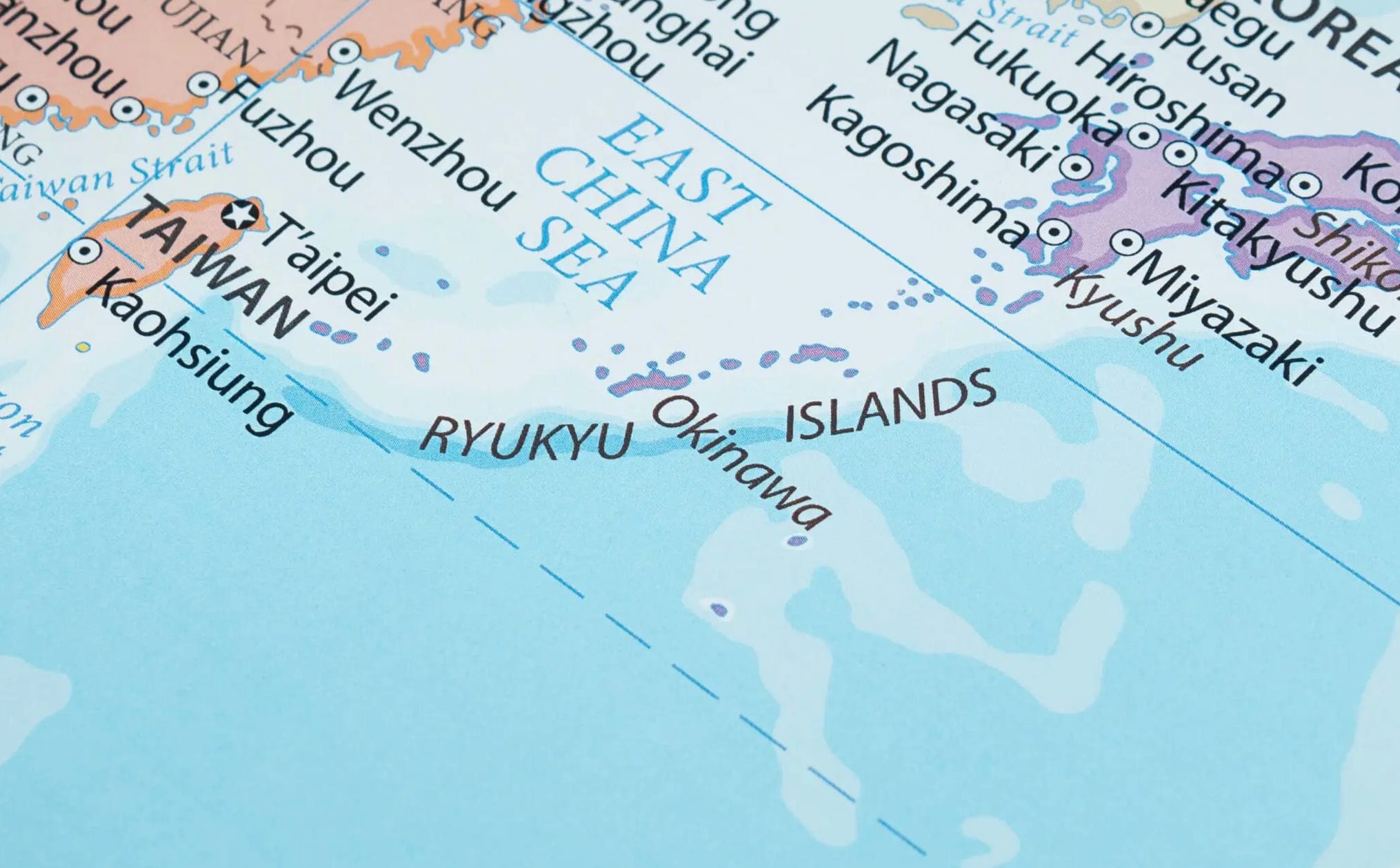
Third: Ukraine. The lesson that Japanese analysts have begun to draw here is that an American president may be willing to sacrifice the interests of a small or medium-sized country in order to improve relations with a much bigger player like Russia or China. Taiwan may turn out to be expendable, at which point Japan’s Okinawan island chain would be under serious threat - Chinese claims to those islands have recently resurfaced.
Public opinion, once deeply opposed to Japan having anything to do with nuclear weapons, is starting to soften. And Prime Minister Takaichi has said she will consider reviewing Japan’s three non-nuclear principles - those prohibitions on producing, possessing or permitting nuclear weapons on Japanese soil. Takaichi has previously criticised the third of those prohibitions as unrealistic.
What to expect for the future? It seems unlikely that Japan will make a dash for its own nuclear weapons in the next few years. It may, however, drop the ‘permit’ prohibition. The new US National Security Strategy reaffirms America’s desire to continue co-operating with countries like Japan. If the price of that co-operation is giving permission for America’s nuclear-armed weapons platforms - submarines, for example - on Japanese land or in its waters, then Takaichi may be willing to pay.
Thank you for reading! If you’ve found this interesting or useful, please hit the ‘heart’ button to help me understand what people would like more of. And please share your thoughts in the comments section.
Thank you for being a subscriber this year. I’ll see you again on 9th January.
Paid subscribers have access below to my analysis of three competing camps in Japan, which are seeking to nudge Takaichi towards their way of thinking on nuclear weapons. If you haven’t yet signed up and would like to read on, please consider a paid subscription - it helps to fund what I do here - or else a free trial.
Analysis
Of the three competing camps in Japan when it comes to nuclear weapons, the one that looks weakest right now is the status quo camp. They want Japan to retain its three non-nuclear principles, but this idea and the broader pacifist stance in Japan is losing ground.
Survey evidence suggests that younger Japanese lack the passionate moral and emotional anti-nuclear commitment of their parents and grandparents. They aren’t in favour of Japan acquiring these weapons right now, but they are willing to be pragmatic - to see what happens in China, for example (where around 100 nuclear warheads are being built each year).
Likely to gain the most ground in the near term is nuclear sharing, where US nuclear weapons are hosted on Japanese soil - as they are in the case of some NATO countries. Prime Minister Shinzō Abe, mentor to Takaichi, advocated for this after the Russian invasion of Ukraine. Supporters see it as a way to enhance deterrence without risking the potentially grave diplomatic repercussions of Japan acquiring its own deterrent.
Most controversial is the idea of Japan doing just that: developing an independent nuclear deterrent. This option currently fares badly in public opinion surveys in Japan, and is closely associated with ultra-nationalist parties - an additional reason, no doubt, why some oppose it.
A softer version of this policy is for Japan to make the most of its existing status as a latent nuclear power. Thanks to its long-standing civilian nuclear power industry, Japan has a significant stockpile of plutonium, enough to make thousands of nuclear warheads. It also possesses advanced rocket technology. This gives it the potential to develop a nuclear weapon quickly, should it choose to do so.
Advocates of a soft version of independent deterrence suggest that Japan could work to reduce this timeframe further while stopping short of actually producing a nuclear weapon. This would send a clear signal to potential aggressors. Opponents argue that rivals like China will already be well aware of how quickly Japan could acquire a nuclear weapon if needed. This itself, they say, amounts to a ‘virtual deterrent.’
Thank you so much for becoming a paid subscriber to my newsletter this year. I appreciate it hugely - it lets me carry on doing all this. I will be in touch in January to arrange the first of our live online Q&A sessions, for those who want to participate. Looking forward to chatting!
—
Images
Eisaku Satō and Richard Nixon: Wikimedia (public domain).

Map: Tokyo Weekender (fair use).