


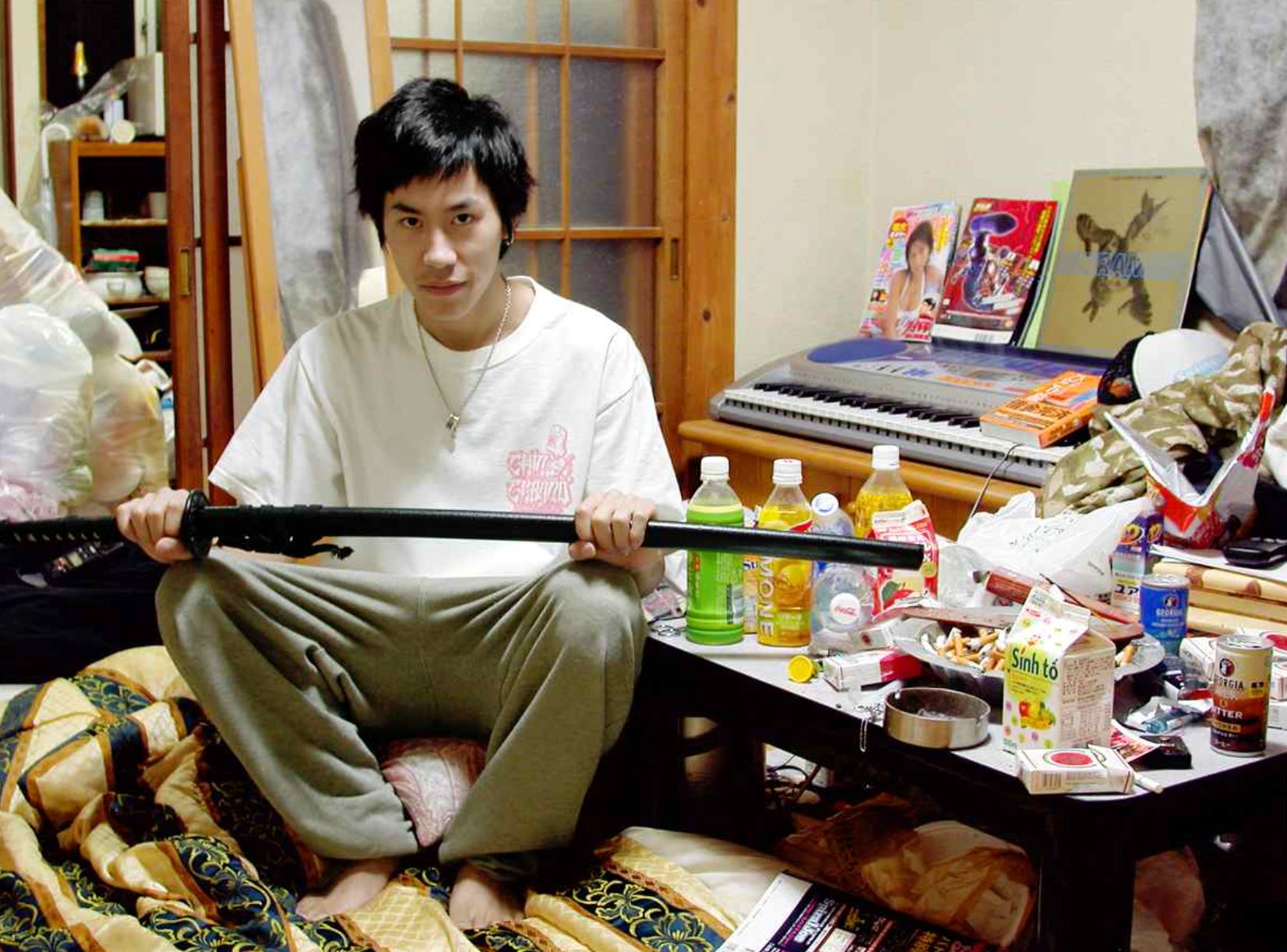
Until a few years ago, hikikomori was one of those words that most people associated only with Japan. It referred to people, mostly young men, who were extremely socially withdrawn. They spent months, even years, shut away in their homes or bedrooms without socializing, studying or working.
Debate raged in Japan over what this said about the country. Was it still a thriving society, where a small number of people were simply too lazy or self-absorbed to get out and about, forging a life for themselves and giving something back? Or was Japan no longer offering its young people the opportunities it once did, after years of economic stagnation? Were some hikikomori making a political point by staying in their rooms?
Presenting a BBC radio documentary about hikikomori this week - you can listen in HERE - two things struck me: how radically the debate has moved on, and how broad its implications for Japan and the rest of us may be.
The biggest change is that hikikomori is now being recognised and tackled around the world. You can find it everywhere from Brazil and South Korea to Iran and Ukraine. It is not, as once thought, uniquely Japanese. Instead, Japan, perhaps alongside South Korea, is simply ahead of the curve in exhibiting some of the traits of a hyper-modern society that foster extreme withdrawal - from precarious life prospects amongst the young to a heavily online and convenience-oriented culture that makes this kind of withdrawal feasible.
Doctors and sociologists who study hikikomori find all sorts of telling patterns besides. Lots of people who become hikikomori have struggled at school, suffered severe mental illness, or experienced dramatic setbacks at work. They end up in a pattern of semi or total isolation that then proves fiendishly hard to break.
The old association of hikikomori with young men has also disappeared. Within Japan, most hikikomori are between the ages of 40 and 64, contributing to what is called the ‘8050 problem’: parents in their eighties providing financial and emotional support to children in their 50s.
And by a narrow margin, most hikikomori in the 40-64 cohort are women. This was possibly always the case, but Japan’s male-dominated work culture concealed it: women staying at home were less likely to be considered unusual.
Recognising the global nature of this phenomenon helps us see connections across cultures and formulate shareable solutions. Our programme focuses on the role here of art and creativity. One of my favourite interviews was with the French artist Ymane Chabi-Gara, at her studio in Paris. In her work, some of which you can see over on Instagram, she explores her own desire to withdraw by taking found digital images of hikikomori in their bedrooms - often surrounded by magazines, screens, food containers and trash - and recreating them in paint. She then places herself in the position of the socially withdrawn man or woman.

Ymane Chabi-Gara
Elsewhere on our travels in the documentary, we meet current and former hikikomori who are seeking ways out of their isolation by creating manga and novels. Others use music, photography and masked appearances at street parades.
Some even become actors. In the short film American Hikikomori, the role of an exasperated father who physically drags a young hikikomori from his room is played by an actor - Naoyuki Ikeda - who was once himself socially withdrawn. Drop-in centres have been set up across Japan, and also in Italy, which is home to the Invisibili project (‘The Invisibles’).
‘Avatar robots’ are becoming part of the picture too. At a cafe near Shin-Nihonbashi Station in Tokyo, robotic waiters are controlled remotely by people who for a range of reasons - including hikikomori - cannot physically be present.
Virtual reality therapies meanwhile help families to immerse themselves in the hikikomori experience from different perspectives - sufferer, mother, father - without the need for more difficult face-to-face interactions.
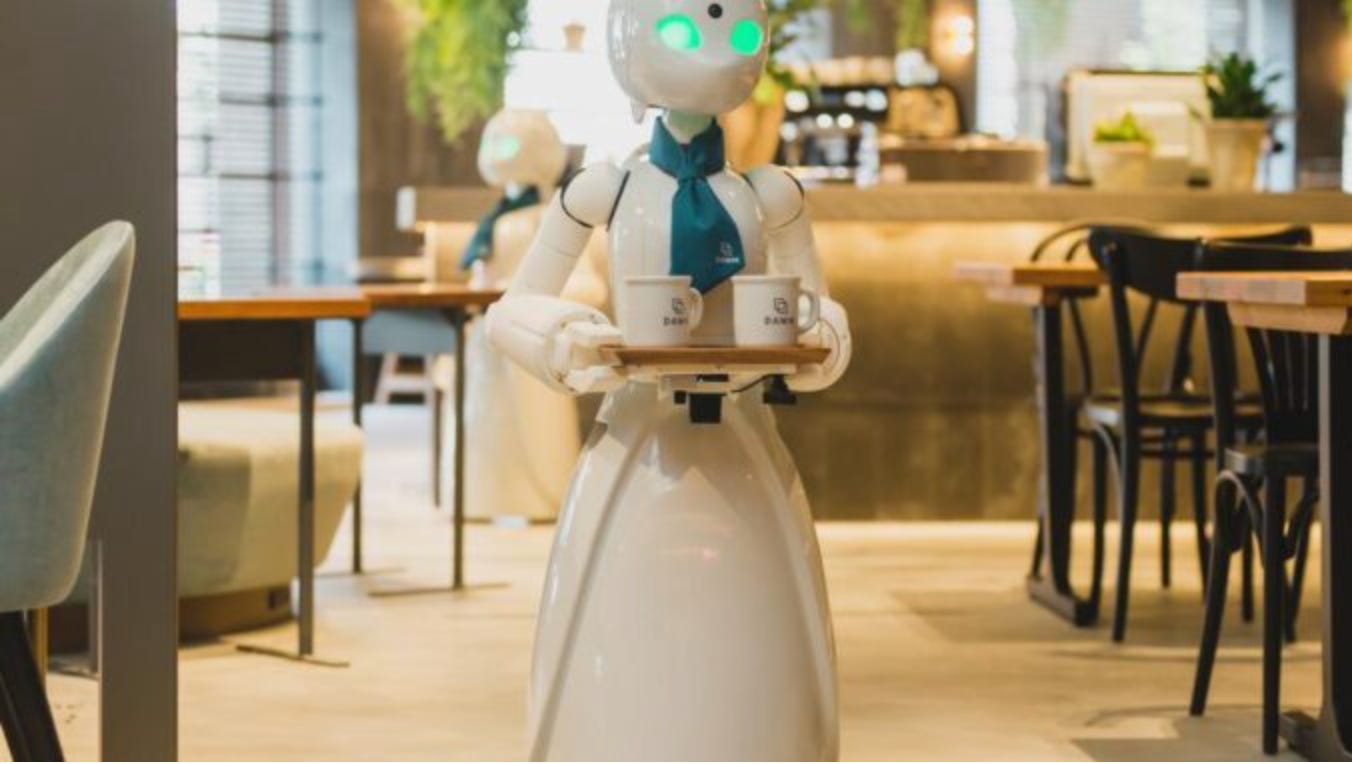
DAWN Avatar cafe, Tokyo
Hikikomori in Japan are thought now to number up to 1.5 million people, or around 2% of the working-age population. The numbers in South Korea, too, are very high. The numbers are contentious, however, not least because post-Covid patterns of working from home mean rethinking how hikikomori is diagnosed. It’s not always straightforward to tell whether someone’s strong and sustained preference for their own four walls is a matter of distress and what psychiatrists call ‘functional impairment’ or simply legitimate personal preference.
This is a debate worth watching, as it unfolds. It speaks to a broader loneliness problem affecting many countries around the world. And it’s part of what may become a shift in Japanese attitudes to making and sustaining communities.
Given Japan’s demographic decline, what should ‘community’ look like? Virtual reality interventions tackling hikikomori are explicitly designed to lead, in the end, to face-to-face interaction. But Kentaro Yoshifuji of the DAWN Avatar cafe is sceptical that community really requires physical bodies operating in what some call ‘meatspace’ - the slightly dystopian term for physical reality, in contrast to cyberspace.
He thinks about ‘being present’ not solely as physical presence, but rather a feeling of being present, which can be experienced by the controller of a robotic avatar and recognised as such by those around the avatar.
If some people genuinely flourish under these conditions, is it old-fashioned to regard it as second-best? Might digitally-mediated connection of this kind become unavoidable in Japan, due to population decline and thinned-out transport networks (the result, in time, of labour shortages and lower demand)?
You may, like me, be tempted to regard this as a sad state of affairs. But I’m going to try to keep an open mind about it, recalling a set of tongue-in-cheek rules set out by Douglas Adams about new technologies. Let me leave you with them, because they’re at once funny and genuinely worth pondering:
1. Anything that is in the world when you’re born is normal and ordinary and is just a natural part of the way the world works.
2. Anything that's invented between when you’re fifteen and thirty-five is new and exciting and revolutionary and you can probably get a career in it.
3. Anything invented after you're thirty-five is against the natural order of things.
Thanks for reading! If you found this at all interesting or useful, I’d be really grateful for a like and a share. It helps me understand whether or not Japan and the World is giving people what they want. And please feel free to leave a comment!
—
Images
Ymane Chabi-Gara: BBC Radio (fair use).
DAWN Avatar cafe, Tokyo: Barista Magazine (fair use).
I've been a hikikomori - or rather, a quasi-hikikomori (because I usually like being around people very much) - since 2020 due to the pandemic (which, from a scientific point of view, is still ongoing as not much has changed since the outbreak, but let's not get into that).
However, what intrigues me the most is how the concept of hikikomori relates to sōshoku-kei 草食系, or 'herbivore men', whom I've recently learned about. Are these two phenomena partially associated with each other? Do they overlap in some ways?
Thank you for sharing this. It is a topic that does immediately provoke feelings of sadness and curiousity at the same time.