


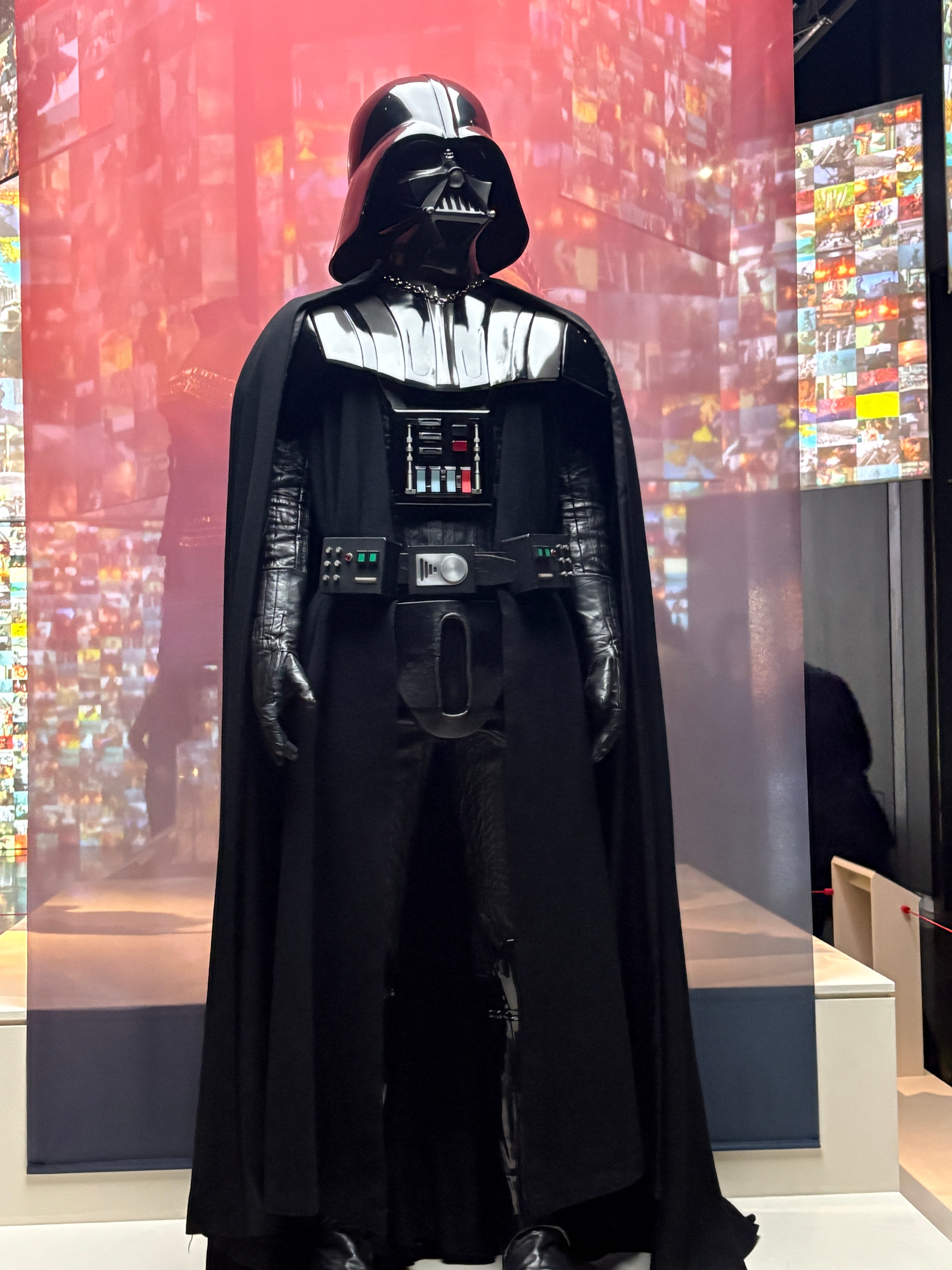
Visitors to the Samurai exhibition at the British Museum will encounter, towards the end, one darkly familiar figure: a beautifully-lit Darth Vader from Star Wars.
For younger readers, this is one of the most famous film franchises in cinema history - and yet one in which I have so far utterly failed to interest my children. I’m not sure whether that means the Force is weak in me, or weak in them…
Why is Darth Vader here? In that question lies one of the secrets of Star Wars’ success: the ability to work existential questions, elemental forces and timeless nobility into a sci-fi film - and somehow make it believable.
The franchise’s creator, George Lucas, drew on a heady brew of Hinduism, Christianity and samurai culture. For the first of these, look no further than Yoda’s classic line, spoken to Luke Skywalker while training him in the swampy, mossy jungle of the planet Dagobah: ‘Luminous beings we are, not this crude matter.’ In other words: this body comes and goes - but that which is most essential to you cannot ever be destroyed.
A major Christian theme - and this won’t be a spoiler, unless you happen to be one of my Star Wars-resistant children - arrives with the death of Obi-Wan Kenobi. ‘If you strike me down,’ he says to Darth Vader, shortly before allowing the latter to take his life with a lightsaber, ‘I shall become more powerful than you can possibly imagine.’
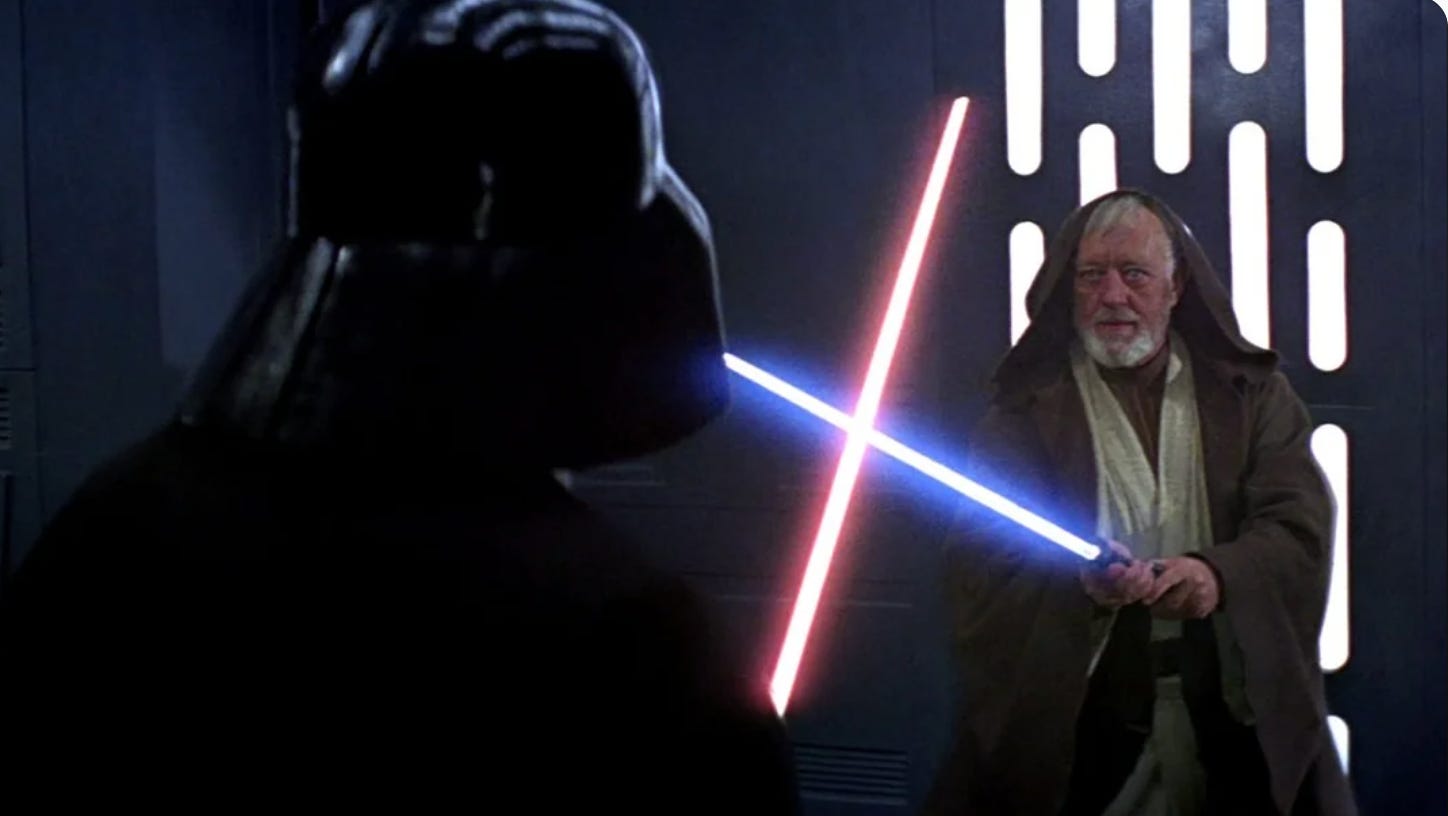
This same scene is a good place to start with the Japanese themes in Star Wars. Darth Vader features in the British Museum exhibition because his helmet - rounded at the top, tapered towards the bottom - was modelled on that of a samurai. The visor was added to explain how Darth Vader could breathe in space.
But that isn’t the end of it. Lucas was fascinated by samurai culture and the films of Akira Kurosawa. These included Hidden Fortress, whose story of a princess being escorted through enemy territory inspired Lucas - and whose two bickering peasants became, in Star Wars, C-3PO and R2-D2.
Lucas even hoped to persuade one of Kurosawa’s favourite actors, Mifune Toshiro, to take on the role of Obi-Wan Kenobi. Lucas appeared to hope that he would bring serious gravitas to the role of an ageing warrior training and encouraging the next generation.
Mifune’s daughter Mika made this claim around ten years ago, adding that her father had been worried that the kind of film Lucas sought to make might end up looking cheap and embarrassing.
Much Japanese sci-fi back then had its tongue firmly in its cheek, constrained as it often was to rely on men dressed up in giant rubber monster-suits. Mifune was serious about his craft, and about samurai culture. So he said no.
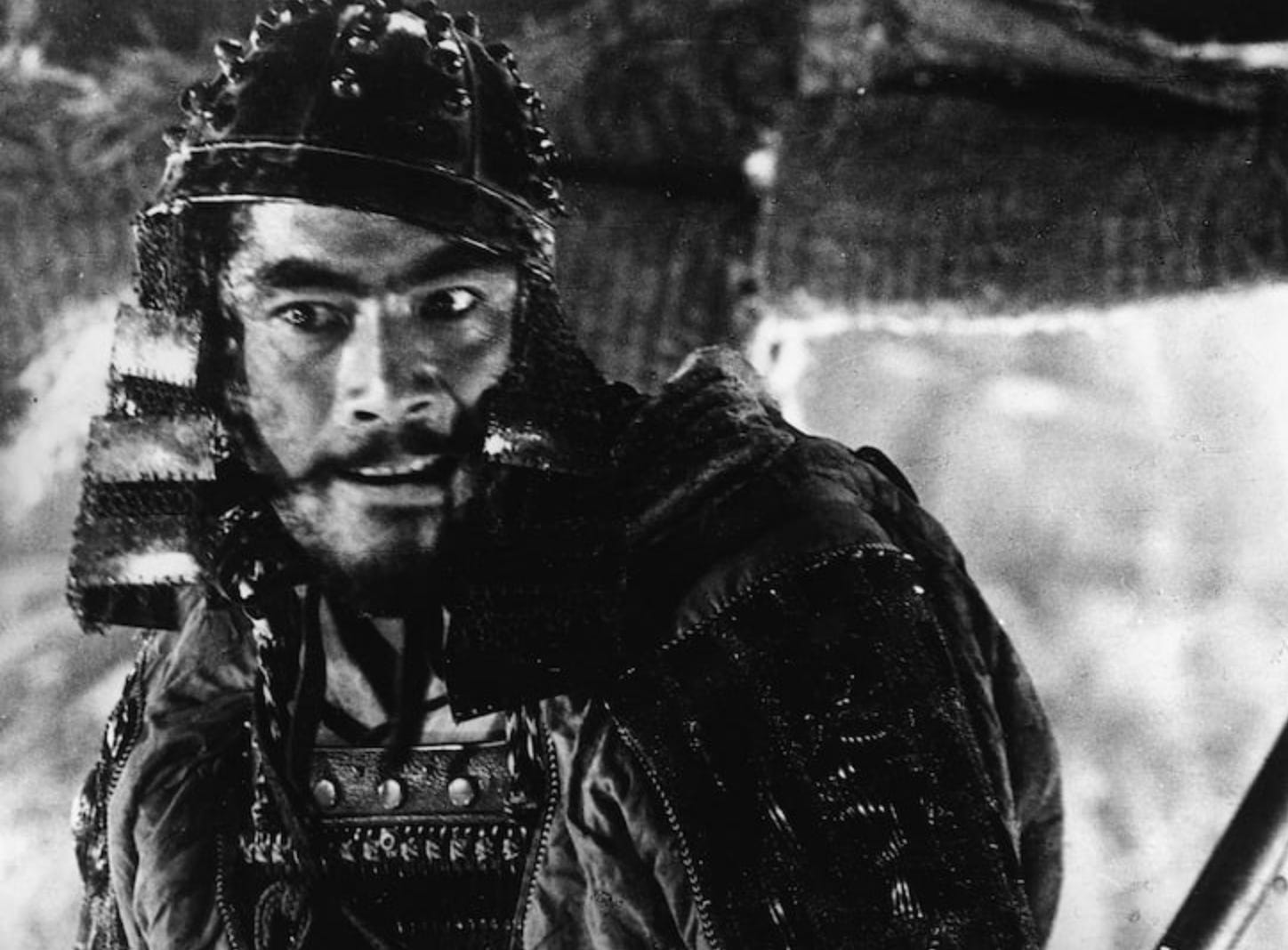
Mifune Toshiro in Seven Samurai (1954)
Lucas then asked Mifune to take on the role of Darth Vader instead, assuring him of a certain level of anonymity because of that famous mask. Again, the answer was no.
Mifune couldn’t reasonably have appreciated, at the time, that Lucas knew a thing or two about special effects, and that his franchise would achieve cult status. But there’s always been a great sense of ‘what if’ here - what would it have been like to see Mifune bring some samurai swagger to Obi-Wan Kenobi?
As a Brit, you’ll excuse me from making the obvious counter-point: what if we had never had Alec Guinness in that role? That signature mix of gravity, cunning and danger! Those gravelly patrician tones! For once a Hollywood creation where a British accent doesn’t signal evil, double-dealing or despicable cowardice…!
Mifune would have been a great Obi-Wan, no doubt. But I’ll settle for Sir Alec any day of the week. He captured the quiet nobility of the samurai - at their best - with complete perfection.
Thank you for reading! Do please share any thoughts in the comments - including ways of interesting my children in taking another look at the Star Wars franchise. And I always like a like, if you feel inclined.
Japan and the World will now be away for Easter, but back on 17th April.
—
Images:
Darth Vader at the British Museum: author photograph.
Obi-Wan Kenobi fighting Darth Vader: still from Star Wars Episode IV: A New Hope (fair use).
Mifune Toshiro in Seven Samurai: Wikipedia (public domain).
.jpg)
It's mind-blowing to ponder on how Mifune could have brought a different perspective to either Obi-Wan or Vader. I am imagining an alternate universe of Japanese nobility. The duel between them remains one of the best in the series mainly because it has a slower, more artful style of combat, with the lightsaber blows carrying real weight like each swing could deliver a coup de grâce.
Although I'm afraid I can't help at all on the question of inspiring your children to love Star Wars as you do as I am also failing in this mission. The lure of faster, jazzier stories like the K Pop Demon Hunters can't be infringed although I have tried to explain they follow the same heroes' path as young Skywalker!
I still remember how fascinated I was by Obi-Wan and his aura, more than with any other character. I did not discover Japanese cinema until much later, so I could not have imagined Mifune playing Obi-Wan. I love Mifune, but Sir Alec will forever be the Jedi Master.