


It’s Day 9. How are your New Year’s resolutions going?
If you’ve pulled a muscle at the gym, succumbed to some supermarket checkout chocolate or busted your new monthly budget, then pull up a chair. Let’s talk about why this almost always goes wrong - and how a concept from Japan may be just what you’re looking for.
For a start, you and I are in good company. Humanity has been hammering away at this new year’s resolution problem for thousands of years. In the West, it’s at least as old as New Year itself. When Julius Caesar moved the start of the year to January 1st, honouring the god Janus, pledges of good conduct for the year ahead were part of the festivities. Some claim it’s at least another two thousand years older still.
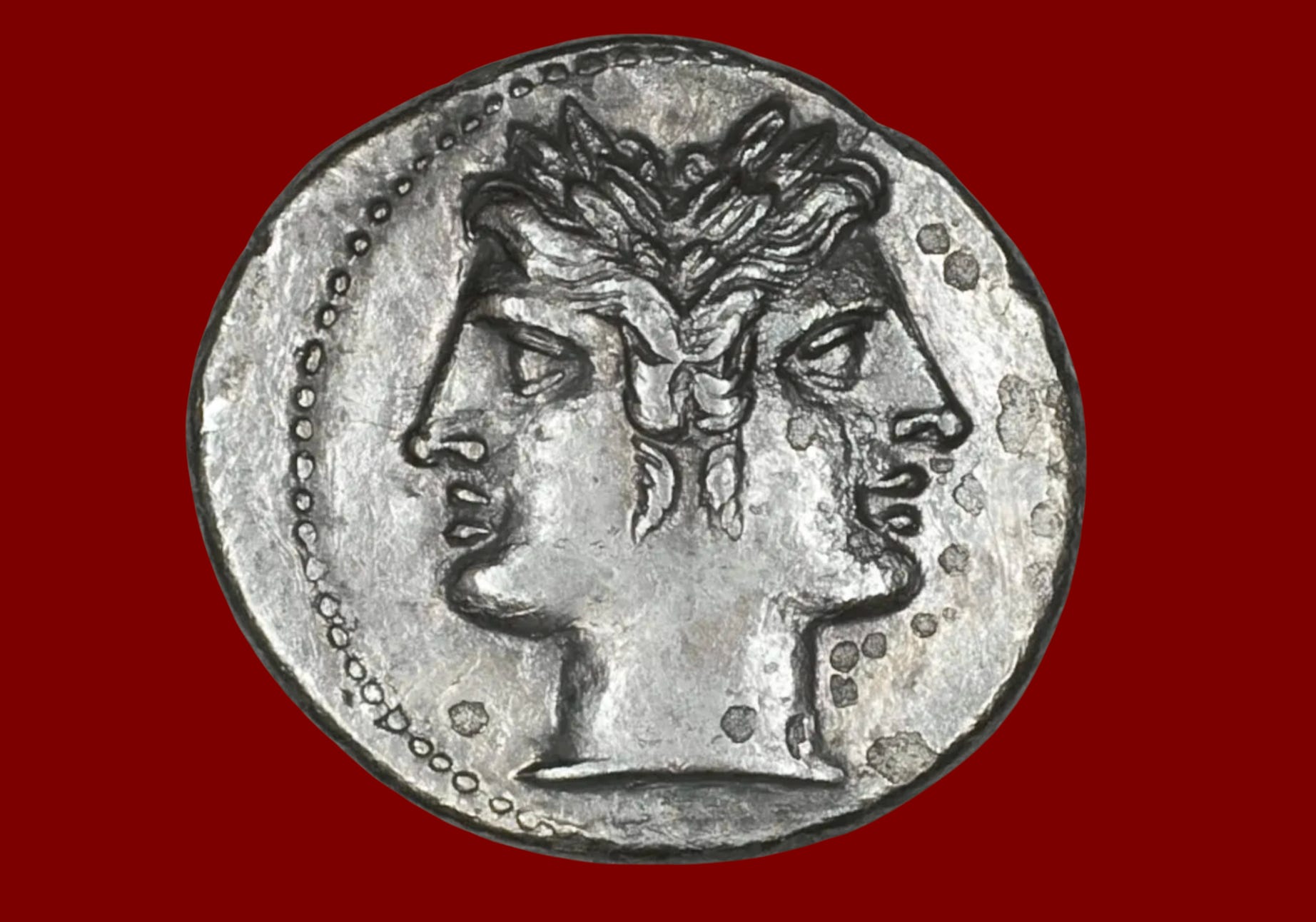
The Roman God Janus
So whether you’re promising the gods or promising a frustrated and sceptical loved one, you’re far from alone. I find it hard to believe that people hundreds or thousands of years ago were much better than we are at sticking to our pledges. Many of us give up by the end of January, and by the end of the year around 91% of resolutions are distant memories. Modern neuroscience reveals that our brains are actually wired to resist changes to the status quo.
A bleak picture - but what the more optimistic of us want to know is this: what are the 9% doing…?
My guess is that they’re getting around that wiring problem either with a shock-and-awe strategy - setting ridiculously ambitious goals and then ramming them through - or by using a virtuous version of boiling the frog: being so incremental with their resolutions that their brains don’t realise the status quo is changing.
This is where kaizen comes in.
If one of your new year’s resolutions is to study more kanji, then I’m already helping you. Kai (改) means to revise or reform. It’s made up of two smaller characters. On the left is ‘self’ and on the right is ‘whip.’ Zen (善) means virtue or goodness.
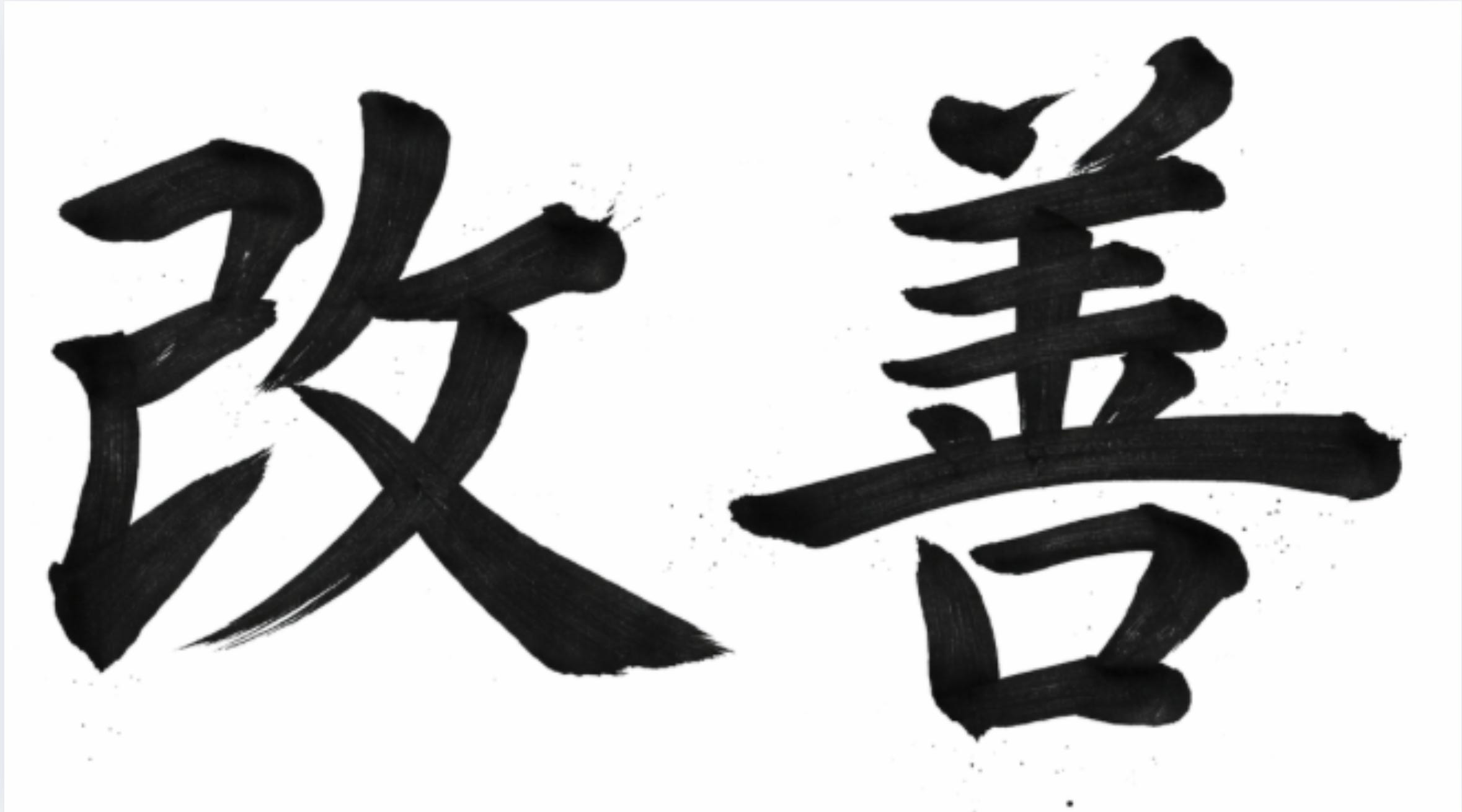
Whipping yourself into greater virtue may not sound very appealing. But the philosophy of kaizen, with origins in Buddhism and used now in business, really means ‘continuous, incremental improvement.’ Used in the right way for New Year’s resolutions, it might just let us combine those two apparently very different approaches: shock-and-awe and boiling-the-frog.
How does it work?
First, do the conventional thing and set yourself a goal: mine, made a few weeks ago through a mouthful of Maltesers, is to remake my relationship with sugar.
But then stop and ask yourself why that goal even matters. I want to get away from peaks and troughs of energy, lose a bit of weight, remain healthy and lucid for as long as possible. These last two are, in the end, battles that we all lose. So they’re not really goals. They’re more like ideals or horizons. They give a direction of travel, even while the notion of reaching a horizon is impossible.
High on the list of people’s New Year’s resolutions is spending more time with family and friends. So why does that goal matter? Because you care about them, you love them? Because love and care matter more than the social media dross that was robbing you of your time back in 2025? Again, love and care are not goals that we reach. They’re horizons.
Once you’ve done this first bit, setting a goal and then digging down and developing it into a horizon, you can come up with small - very small - changes in your life that are in keeping with that horizon.
If you’re a sugar junkie like me, you might have one less slice of toast in the morning. If social media is your vice, you might make a habit of checking in with a loved one before you check your socials.
In both cases, there’s no goal involved: no number on the weighing scales that you’re looking for; no number of minutes in the day to be spent on love or care. And if you fall off the wagon, you don’t have to worry about a goal moving ever further out of sight. The horizon is still there, helping you start afresh tomorrow with those continuous, incremental improvements that lie at the heart of kaizen.
Something like this idea appears everywhere you look around the world. Immanuel Kant talked about ‘regulative ideals.’ Whether it’s knowing God or explaining nature, these are not goals ever to be fully achieved. They’re necessary guides to inquiry and life.
Buddhism’s ‘bodhisattva vow’ is the pledge not to enter Nirvana until all sentient beings have been liberated. But that moment never comes. The vow is about living as if every being could be saved and must be included.
In Chinese and Japanese thought, self-cultivation is a lifelong project. It’s not a matter of achieving one particular thing and then walking away.
And in Shinto, as in Japanese poetry, you find close attention being paid to nature’s cycles and seasons alongside a profound recognition that reality never stands still. If that’s true, then horizons are a wiser ideal than fixed goals.

Immanuel Kant (1724 - 1804), rumoured to have only ever eaten cheese sandwiches because he was so busy thinking.
I can’t guarantee you a place amongst those hallowed 9%, who will end 2026 with a smile on their face. But let me leave you with three reasons why I think kaizen, in the sense that I’ve laid it out here, is worth a try.
First, by seriously questioning our goals, we get beyond superficial hopes and hacks and arrive at what we really value. That in itself is precious.
Second, many of us will have come to associate goals with the risk of failure, guilt, punishment or contempt for yourself. Kaizen fosters self-respect, clarity and self-compassion.
Finally, if like me you’ve entered 2026 with a fearsomely long To Do list and lots of looming deadlines, surely the very last thing you want is to add something else. Continuous, incremental improvement, guided by a horizon not an outcome, offers a refreshing break from that otherwise ubiquitous To Do list mentality.
If you’ve tried something like kaizen in the past, or if you have an alternative tip for new year, please let me know in the comments. And see you next week. Happy New Year!
Oooh *very* nicely composed and presented there, sir! Fortunately for me whose car/motoribike collision fractures ensured that i'd have to acquire the yoga discipline, incremental progress is the very nature of the beast, and bodily fluidity and beauty its reward! It seeems to me the imperative of the "sexual revolution" had it backwards: it should not be "free your mind and your ass will follow" it should be "free your ass and your mind will follow" Genuine changes only become possible when your whole body now *feels* like making them !
Good luck!