


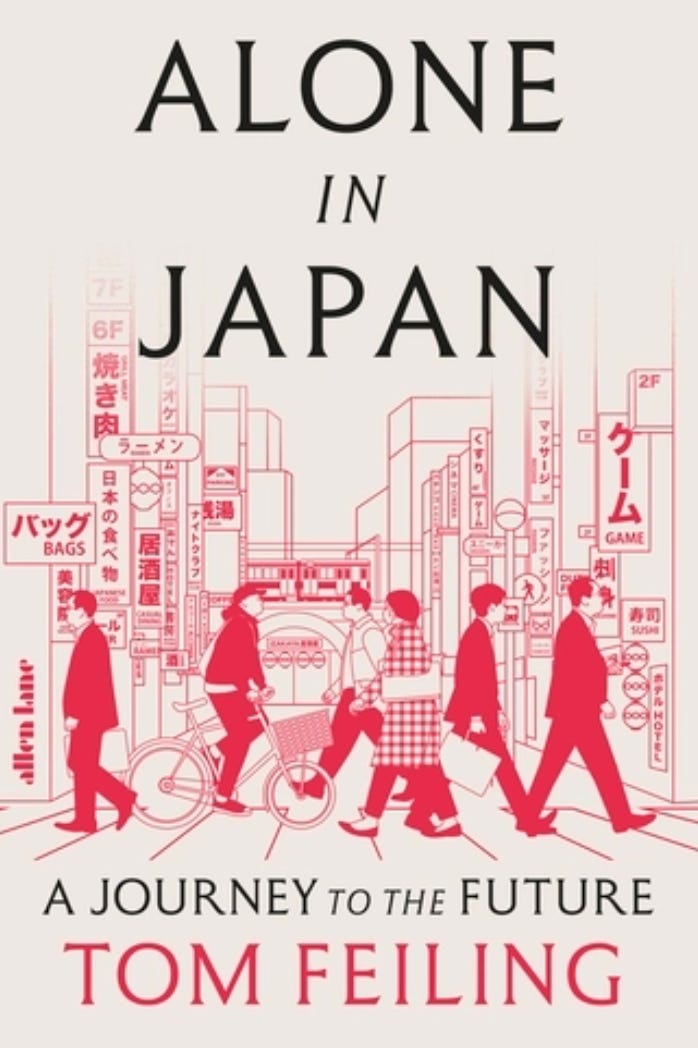
This week, I’ve been reading Alone in Japan: a disturbing yet strangely beautiful meditation on Japan’s declining population, written by Tom Feiling and due out at the end of this month. Having lived in Japan in the early 1990s, Feiling returned thirty years later to witness the social fallout from its shrinking population and ‘lost decades’ of economic stagnation.
Many visitors never see this side of Japan, because most of the major tourist attractions are thriving. Much of Tokyo still feels young and wealthy. Kyoto is hardly short of people. Hiroshima has managed to both transcend and immortalise the suffering that befell it eighty years ago.
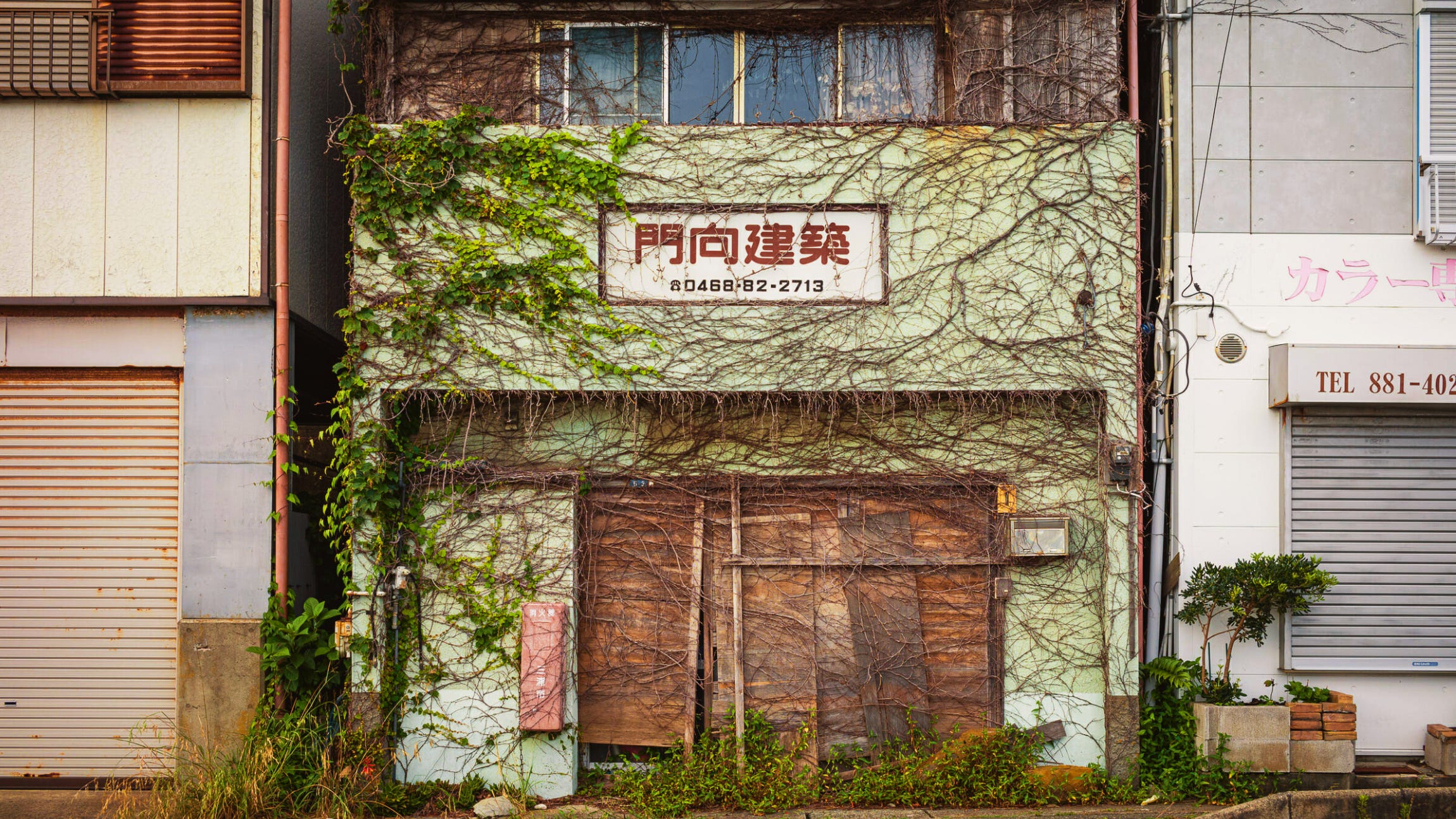
But readers who have wandered off the beaten track, or who are based in Japan, will have seen something of what Feiling describes. Abandoned homes - in urban as well as rural areas. Shuttered shops. Quiet streets. School playgrounds with only a handful of children out playing.
Japan’s shrinking and ageing population means that by 2050, an extraordinary 44% of Japanese households may consist of a single person living alone.
If, as expected, Prime Minister Sanae Takaichi triumphs at the polls this weekend, perhaps she will grasp the nettle and attempt to do something radical about Japan’s demographic decline and all the associated loneliness. For a reminder of the options, have a look at the piece I wrote a few months back.
What strikes me about Feiling’s account is that people aren’t holding their breath for a miraculous intervention. They’re trying to make the best of what looks like being a managed decline in Japan’s population by finding ways of living with increased isolation. This in a culture, as Feiling points out, not known for fostering ‘rugged individualists.’
A decade ago, a book called The Courage to be Disliked became a bestseller. It wasn’t especially original: it leant heavily on the psychotherapist Alfred Adler, a one-time colleague of Sigmund Freud. But it’s remarkable for attempting to persuade people that running their lives according to the wishes of others simply won’t pay off anymore. The old social contract is broken, and it’s not coming back.
Other titles include Supreme Solitude and Retired in my 20s: A Happy Life with Five Days Off Per Week. The latter is by Daigo Ohara, a writer who specialises in advising people on the economics of opting out of the harsh work culture that defined Japan until comparatively recently. Another of his books promises to show people how to live in Tokyo on just 900,000 yen per year - that’s around £4,200 or $5,700.
Alongside these publishing trends, Feiling traces the rise of faddish new words containing the word ji, or ‘self.’ Many sound like globalised clichés: being true to yourself (jibun rashisa), self-actualisation (jiko jitsugen), the search for self (jibun sagashi). But they have a different valence in Japan, given its longstanding communitarian ideal.
Back in the nineteenth century, translators struggled to find an acceptable new word for the political concept of liberté. They settled on jiyū (literally ‘self-reason’), but critics interpreted it as having one’s way at the expense of others. Plenty of words in use today hint at a similar low regard for an individual as a single, isolated unit: jiko-chūshin (self-centred), jiko-hoshin (self-preservation), jiko-kenjiyoku (attention-seeking).
An argument is now raging in Japan - and has been for years, in fact - over whether young people who embrace isolation are selfishly or morbidly opting out of society, or whether they’ve effectively been booted out by a rise in insecure working conditions and their devastating knock-on effects. Those effects run from problems getting a mortgage to deciding that marriage and a family will never be affordable.
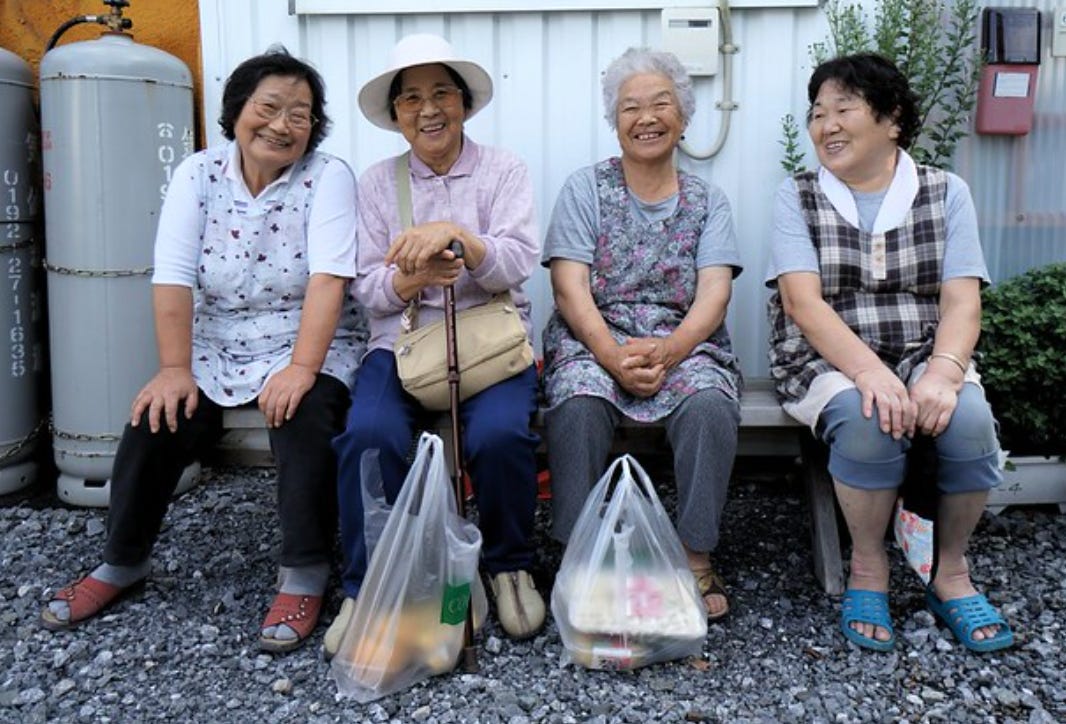
Less open to question is whether elderly people have ‘chosen’ a lonely fate. Many live alone after the death of a spouse. They’re often physically healthy and sometimes very active. But they suffer devastating, profoundly disorienting loneliness, compounded by poverty amongst women in particular - because they spent their lives tending a household rather than building up a pension.
For years, psychiatrists and social services have been trying to tackle suicidal feelings in this demographic, so strong can the conviction become that they are little more than a burden on people. In the haunting words of the proprietor of a place Feiling stays at in the village of Kaifu: ‘Isolation is a quiet experience. It can make people strange… without jobs and often without families, their minds wander… People no longer feel that they are being propelled into the future.’
There is some light on the horizon. Five years ago this month, Japan got its first Minister of Loneliness. In 2024, a Headquarters for the Advancement of Measures to Address Loneliness and Isolation was established. It’s headed by the Prime Minister, involves all Cabinet members and is working to co-ordinate support services and counselling across the country.
Citizens have meanwhile been mobilising in support of one another: with community cafes, hotlines and zero-pressure social spaces. These last are intended to be places where people can go simply to be around others, without worrying about making conversation.
Perhaps, in time, long-running efforts to get more people out of the big cities and back to the countryside will pay off. An astonishing half of the population currently live in just four great conurbations: Tokyo, Yokohama, Nagoya and Osaka. If wealth, culture and people can all find their way back to rural Japan, it’s possible that new forms of community might be pioneered there. Advocates of fresh alternatives to the old model of never-ending national economic growth argue that smaller populations can be happy, integrated and productive ones.
I intended to leave you on this relatively hopeful note… but I can’t resist a final comment on that famous symbol of modern Japanese life: the convenience store (konbini).
Many a visitor to Japan returns home with a long wish-list for their own country, from clean public toilets everywhere to quiet trains and high levels of trust. Convenience stores are often on that list.
And yet Feiling, in one of my favourite passages from his book, asks us to think for a moment about the lifestyles they make possible. Ready-made meals, banking, parcel collection, office facilities, household essentials: all these things make it easier to live without family homes - to live without families.
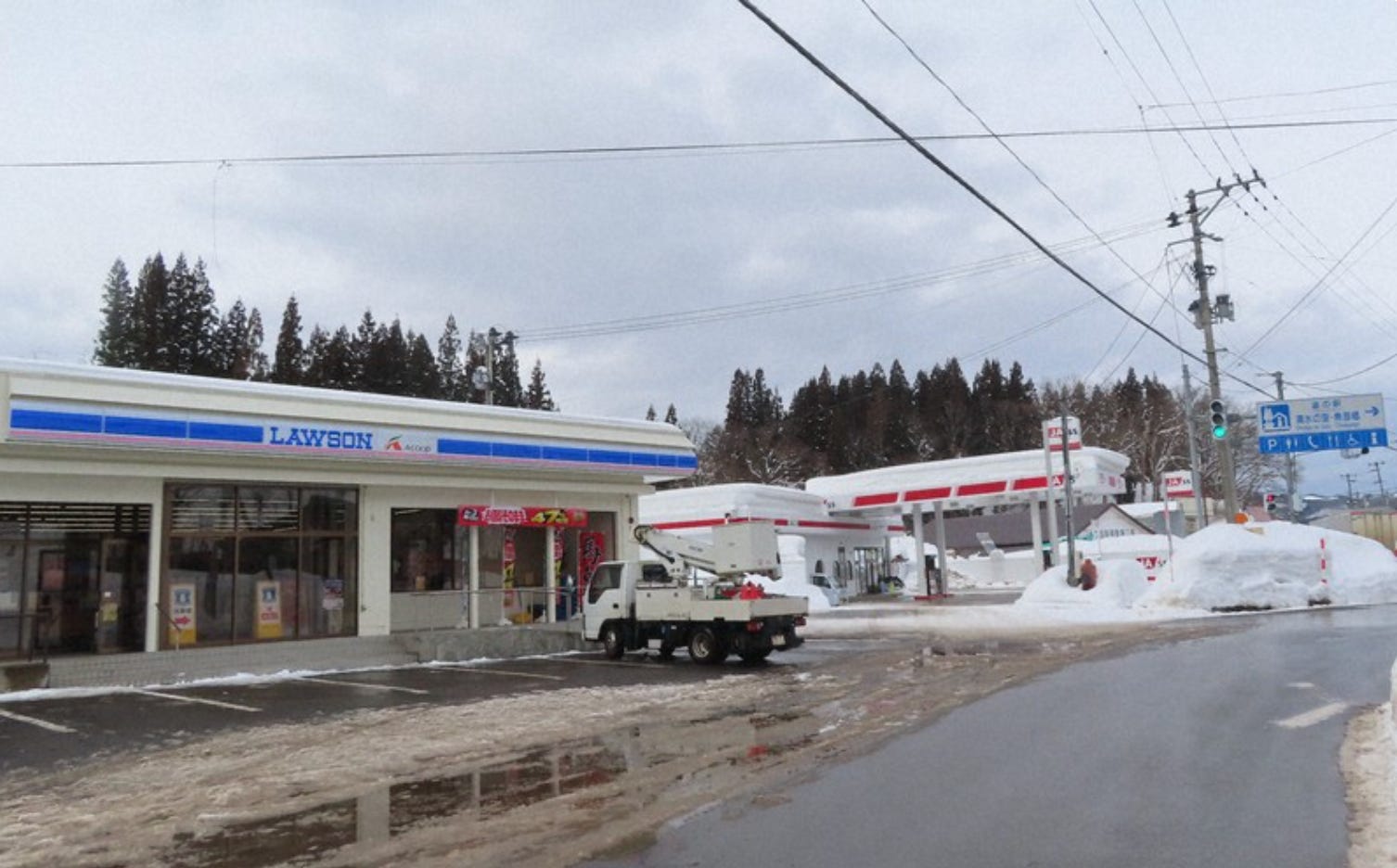
I’m not pinning Japan’s problems on the rise of the convenience store - though it’s interesting that they emerged at the very same point, around fifty years ago, that the seeds of Japan’s population decline were sown. It’s more that they encourage a kind of quiet, anonymous coping, rather than the urgency and action that’s needed.
Finishing Alone in Japan, I had the strong sense that there is still enough energy and willpower in Japan for its loneliness crisis to be successfully tackled and perhaps become a guide for countries like the UK, which are heading slowly but surely in the same direction. The question is how quickly and how decisively that energy and willpower can be harnessed and deployed. There isn’t much time left to drift.
Thank you for reading! Please share your thoughts and experiences in the comments - and I always appreciate a share and a like if you feel inclined…
—
Image credits:
Abandoned house: Tokyo Times (fair use).
Elderly women: Borgen Project (fair use).
Convenience store (Akita, Japan): Mainichi newspaper (fair use).
Great article Chris and looking forward to the book. Every time my wife and I visit her home town in rural Nagano there are more shops shut, less people in the town and a general decline in amenities. The local government has tried lots of different things to promote the town but it can't compete with the surrounding cities as a place to live. I have no idea what the answer is. Let's hope services that do exist for people still in the town don't disappear completely. There are alot of elderly people there who live alone.
Every time I come across a story about aging and loneliness in Japan I'm reminded of Ozu's remark that he was portraying the dissolution of the Japanese family in his postwar films. He was no traditionalist die-hard, as interested in the modern as the ancient and it wasn't reactionary even then, just questioning. Now it seems very far-sighted.
When I saw Chieko Baisho in Plan 75 (2022) I even thought the film might have been titled "The Last Days of Noriko". The Noriko most people think of would have been about 100, not 75 of course, but for me the link was there.
I hope Japan finds a way forward. I shall look out the book.