


Before we get started, enrolment is now open for my upcoming Zoom talk on How to Read Japanese Art. I’m running it twice to accommodate different time-zones, but each session is capped at 20 people. So if you’re keen, please book sooner rather than later. I’ll be covering all things Hokusai, Hiroshige, screens and scrolls. Newsletter subscribers get a discount.
18th November: 10am and 7pm London-time
How to Read Japanese Art: A Beginner’s Guide
Details HERE
Booking HERE
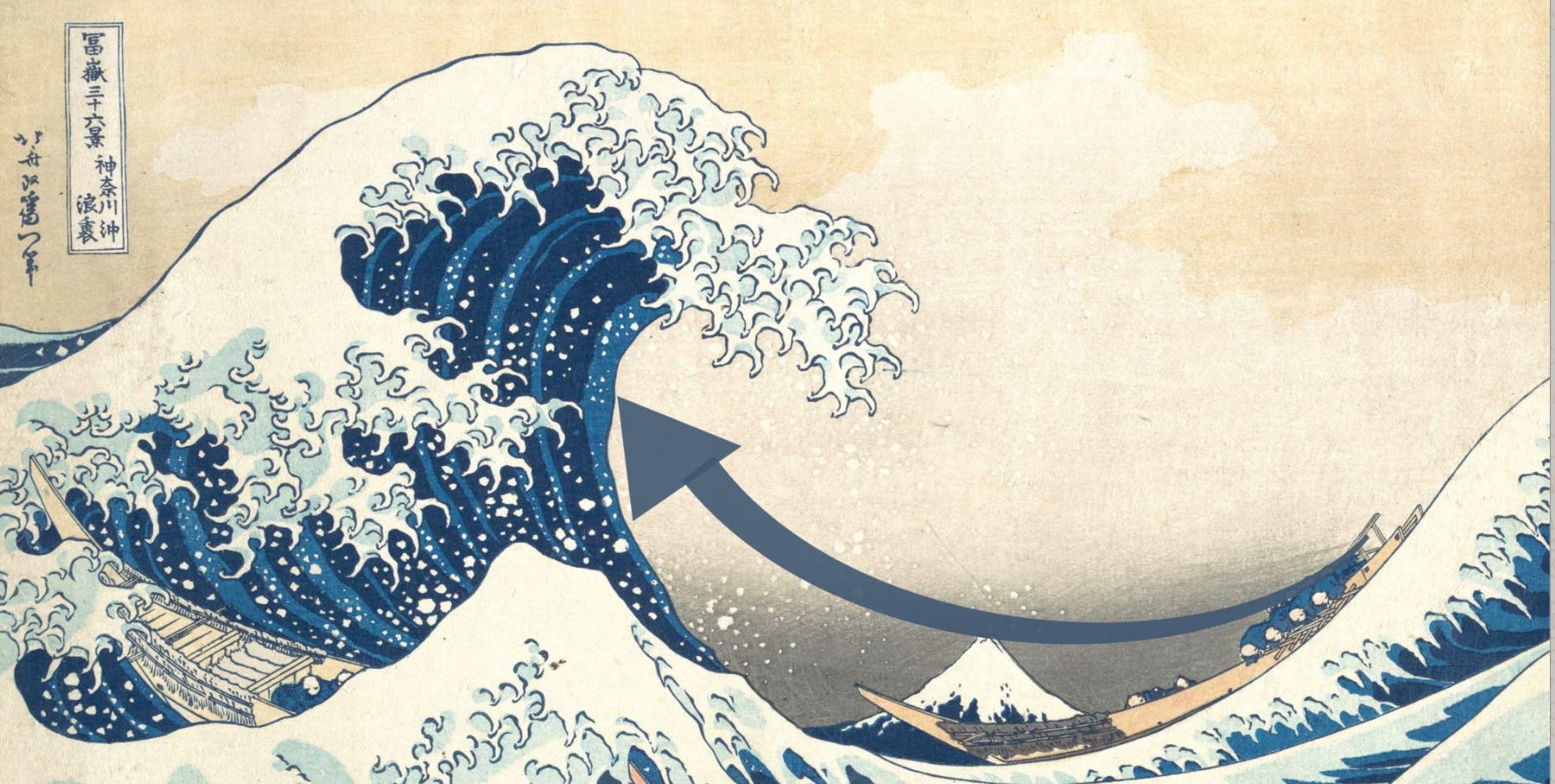
My first 60 minutes in Japan were a massive disappointment.
It was 2002, and I’d booked myself onto what sounded like the very swanky ‘airport limousine’ service from Narita airport into Tokyo. In fact, it was a big, sputtering orange and white coach which crawled along concrete overpasses while providing a dismal view out of the window: featureless beige buildings, tied together by tangles of cable and the occasional bit of rusty neon signage.
Where were the verdant green paddy fields and misty pine-topped mountains of my imaginings? Where were the temples, with their ancient wooden columns and wafts of incense smoke? Had Japan forgotten what beauty was?
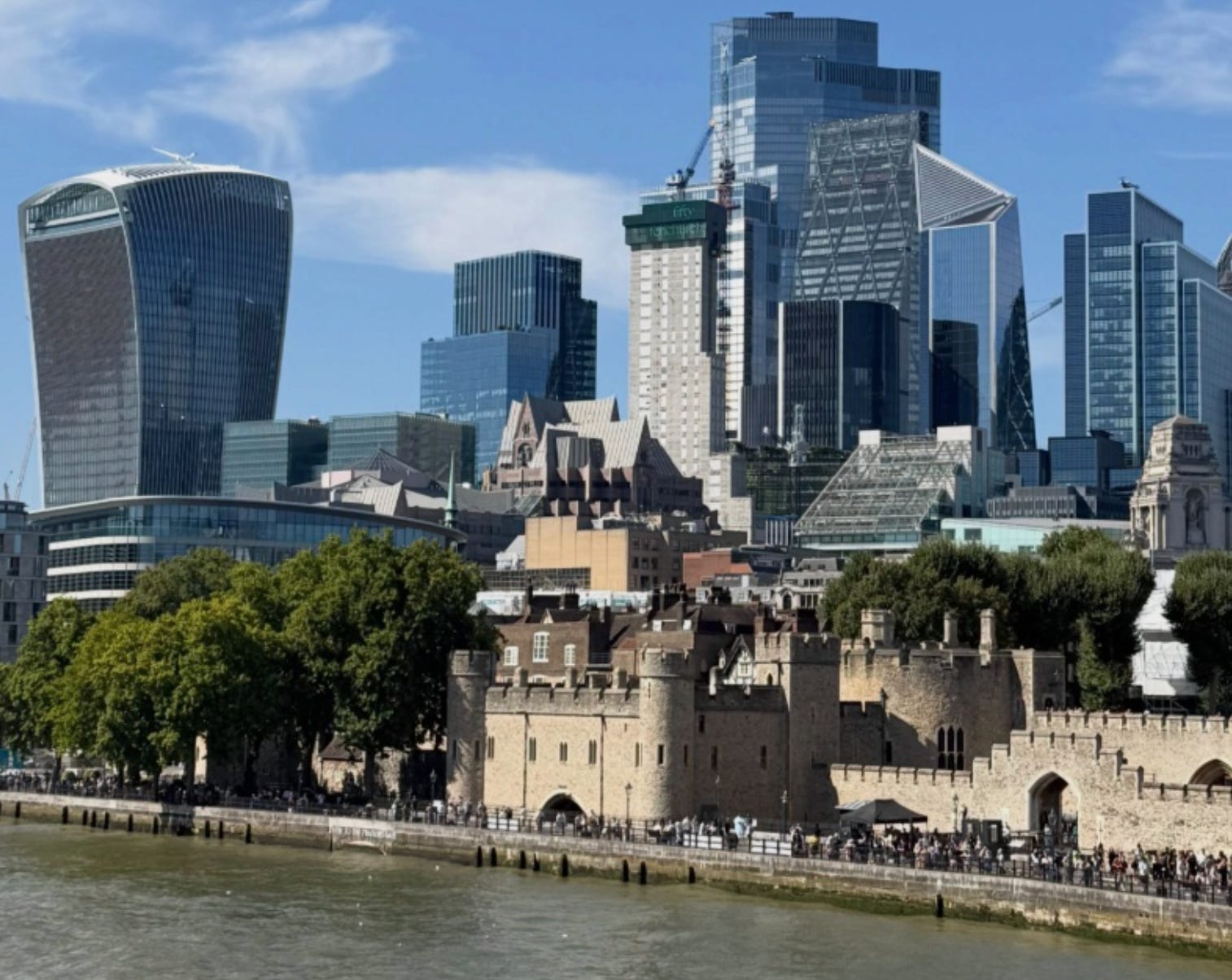
Japan is hardly the only country where the drive out of the airport makes for a poor first impression, of course, or where the old continues to trump the new. It’s unfair to compare a cathedral to a retail park, or the Tower of London as we’d all love to see it…
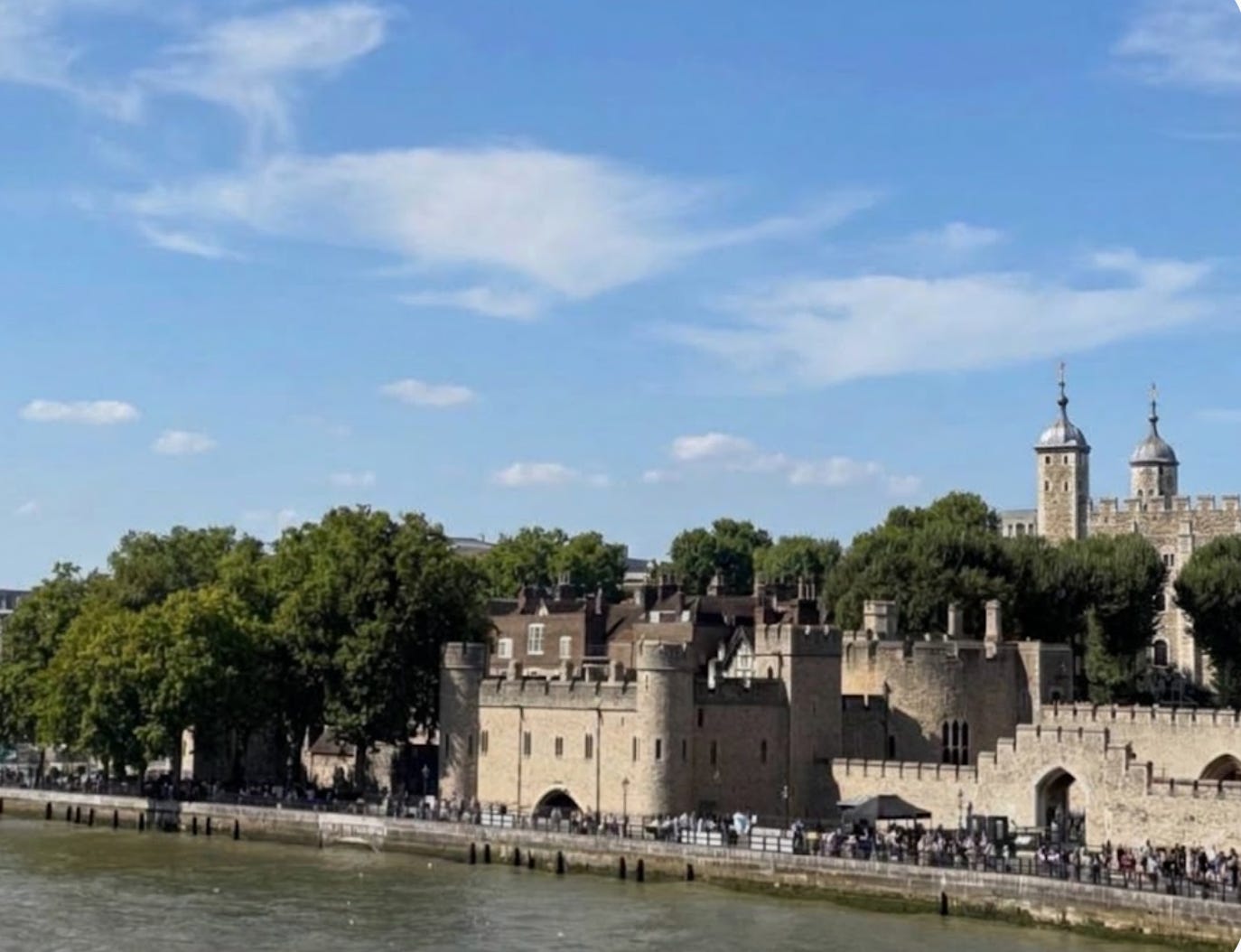
… versus what you actually now get:
Still, more than two decades on, I’m still sometimes struck by the transition when you enter Japanese shops or restaurants: from the visual clutter of streets full of awkward balconies and exposed equipment into a space where every last detail has been thought through.
I’m not the only one to have asked how it is that a country that produces some of the world’s most beautiful art, objects and interiors can also be home to underwhelming cityscapes. The intrusiveness of overhead cables is one of the things that visitors to Japan often complain about, and just this past week the city of Tokyo has ramped up its efforts to require builders to bury cables rather than erect new poles - both on aesthetic grounds and because poles and wires might block emergency services vehicles if they come down in an earthquake.
It’s worth saying, first, that Japanese beauty has always been about more than rustic simplicity and tea-ceremony restraint. The great warlord Oda Nobunaga’s sixteenth-century Azuchi Castle boasted vermilion lacquer and lavish gilding, with flowers, wild animals and mythological scenes competing for space on hand-painted walls. It was a statement as much as a home: a base near Kyoto for a warlord on the up, who needed visiting friends and rivals to understand very quickly who they were dealing with.
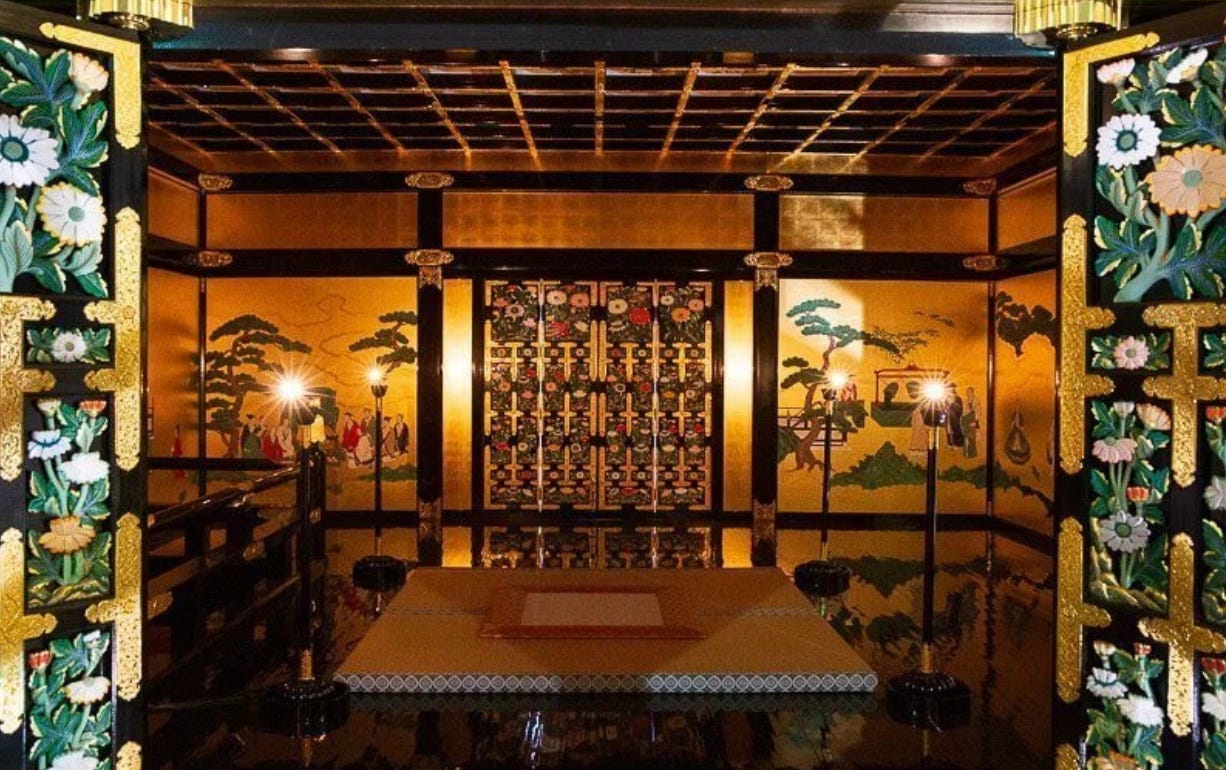
Reconstruction of Azuchi Castle main keep, 6th floor
Alongside warlord maximalism, there’s also the celebration of the everyday, found in the art of print-makers like Utagawa Hiroshige and Hiroshi Yoshida.
Hiroshige used shadows cast by moonlight to raise ordinary street bustle to the level of the sublime. Yoshida used lamp-glow and the aftermath of a rain shower to achieve the same effect.
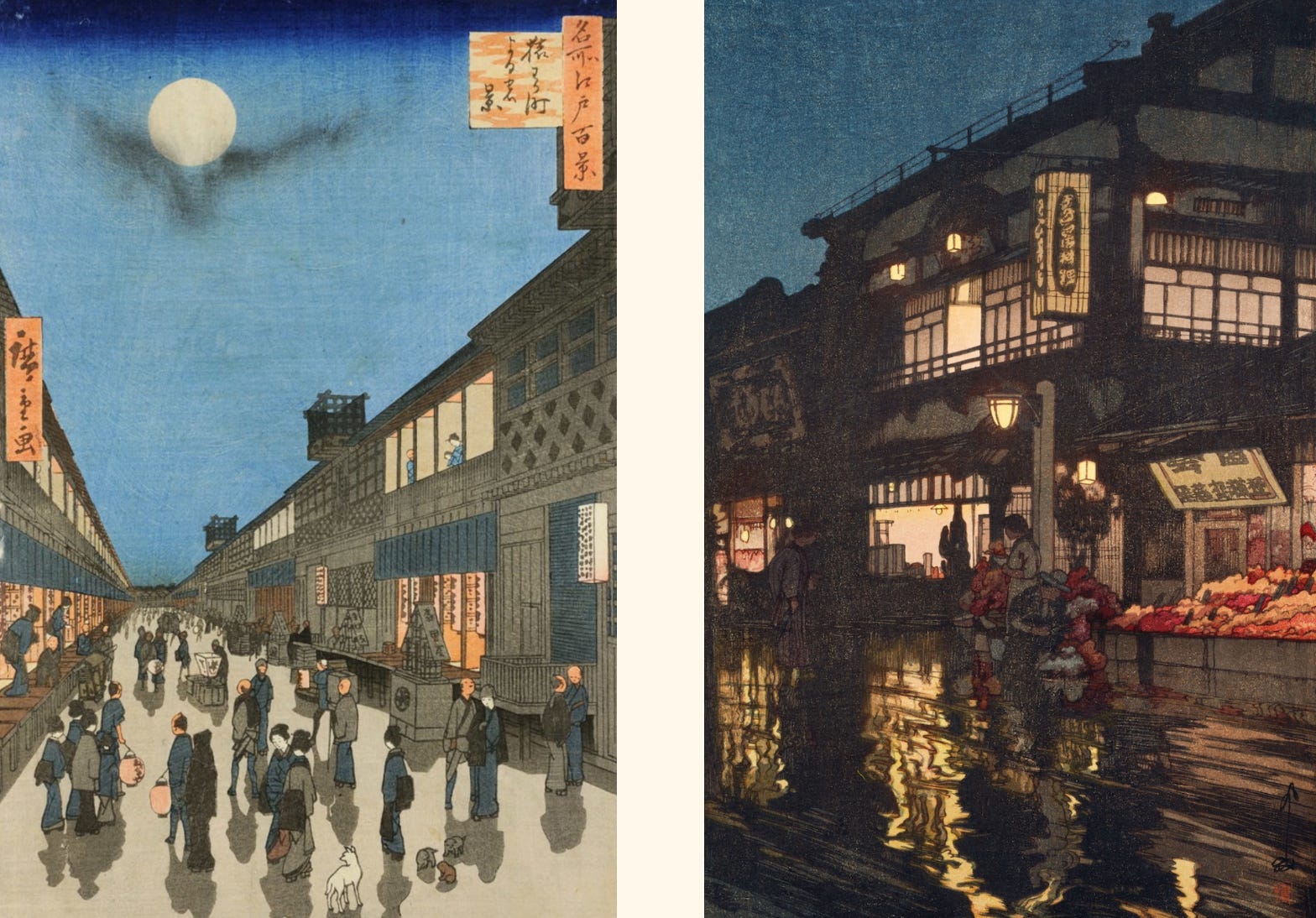
Left: Hiroshige’s ‘Night View of Saruwaka-machi’ (from 100 Famous Views of Edo, 1856)
Right: Yoshida’s ‘Kagurazaka Street After a Night Rain’ (c. 1929)
By the time Yoshida made this print, Japanese cities were starting to see riotous competition between traditional wooden buildings and Western-style offices, factories, tramlines and electrical infrastructure. Tokyo’s reconstruction after the Great Kantō Earthquake of 1923 brought opportunities to modernise, but didn’t produce a uniformly planned city.
Then came the destruction of the Second World War. In the wake of American air-raids in the spring and summer of 1945, the most pressing need was to house the homeless and later to accommodate people moving from the countryside to emerging mega-cities like Tokyo and Osaka.
The Japan Housing Corporation, founded in 1955, built large ‘danchi’ estates and new towns in response. Surviving examples can look monotonous. But for many families moving in during the 1950s or 1960s, they were beautiful: safe, modern and richly symbolic of a new era of peace and fresh starts. They were just as important for what went on inside: family life free from the risk of conscription to a doomed war, lived amidst high-tech comforts from refrigerators to televisions.
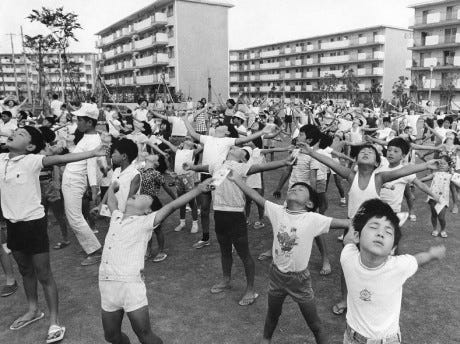
Radio calisthenics outside early postwar danchi apartment buildings
These were hardly architectural masterpieces, of course. Amidst the postwar need for speed in building homes, followed by decades of fast-changing building regulations, Japan’s engineers became world leaders both in making buildings that could survive earthquakes - including skyscrapers designed to sway rather than collapse - and in designing homes which could be put up quickly and then taken down again a few decades later.
This often seems strange to people in the UK, where the hope is to one day buy a home that will grow in value over time. In Japan, it has often been cheaper to build afresh than retrofit to meet new and higher standards. This, plus tax and lending rules, has led to a situation where land retains value but the prefabricated structures sitting on top are a depreciating asset. The dream is not to inherit a home, but instead a good-sized patch of land on which you can build a brand-new home - in some cases picking from a catalogue.
Personally, I like the sound of that. But it makes it harder to get continuity, or a sense of intention across a neighbourhood. What’s remarkable is the way that artists have been able to help people feel at home in cityscapes where finding beauty in minimalism and uniformity is not an option - and where the mechanics of what makes streets and buildings work are often found on the outside rather than the inside, from air-con units to cables and poles.
This is helped, I think, by planning rules that allow houses and shops to co-exist. You can walk through a neighbourhood and find a little restaurant tucked in beside a family home. Artists build on this intimacy, giving us streets that are intentional after all: not in the sense of a single designer’s masterplan, but brimming with a community’s everyday purposes.
Even those cables can be overcome. Research suggests that people screen them out after a while anyway, but one of the things that first struck European artists about Japanese woodblock prints was the way they actually valued partial or obstructed views. Mount Fuji glimpsed through a cooper’s barrel; or the moon seen from inside a tatami room.
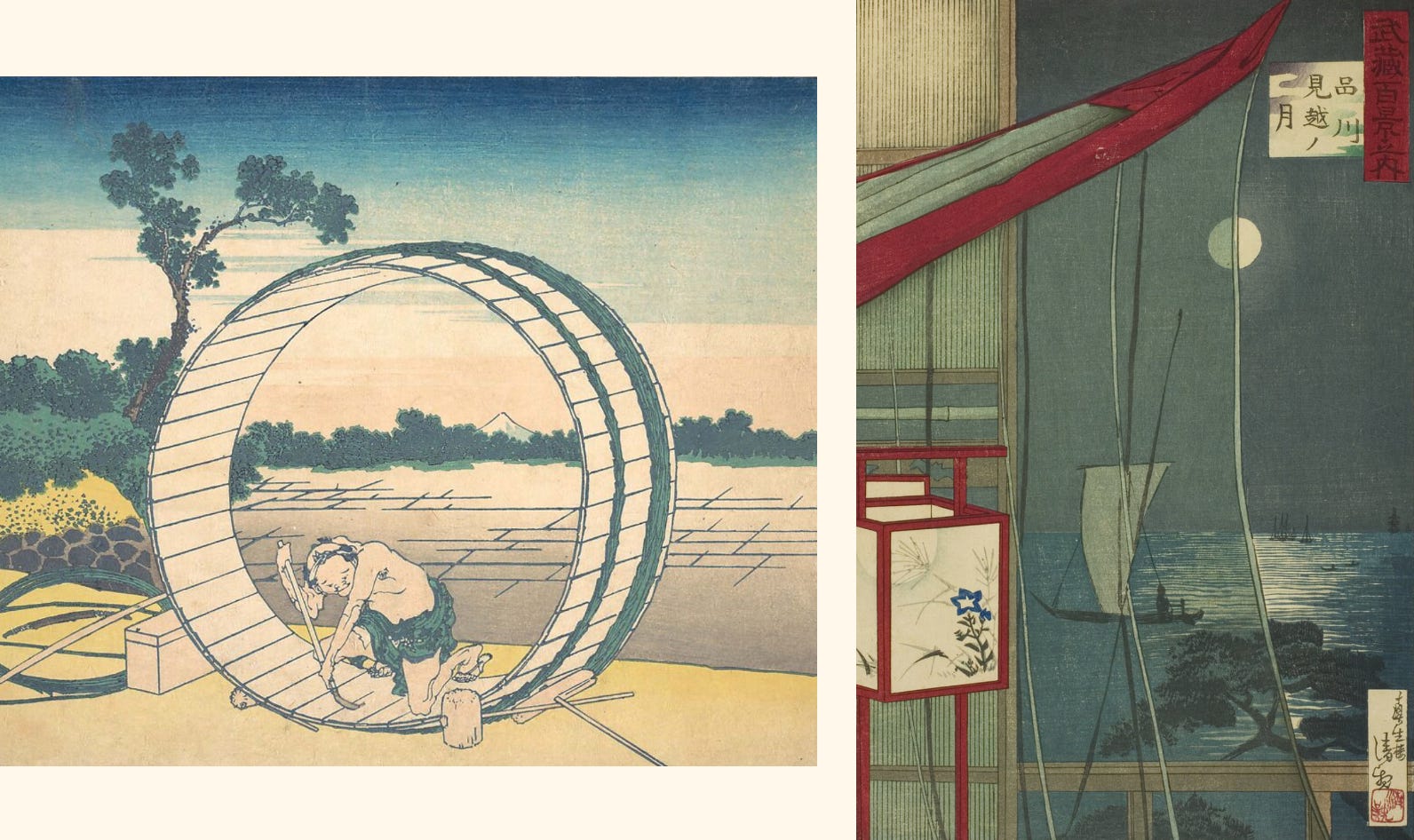
Left: Katsushika Hokusai: ‘Fujimigahara in Owari Province’, from the series Thirty-six Views of Mount Fuji, c. 1830-32.
Right: Kobayashi Kiyochika, ‘The Moon Beyond Shinagawa’, from the series One Hundred Views of Musashi Province, 1884
I’ve found that prints like these really have, over time, changed the way I appreciate beauty. I’d now find a simple, unobstructed view of Mount Fuji quite dull. There’s something about the sheer intensity of real beauty - and perhaps also real goodness - that you can only gesture at it, or get a little glimpse. Anything more than that, and our ability to perceive it seems to shut down and we miss it altogether.
The heirs, of course, to Japan’s woodblock masters are manga and anime artists. If you’ve learned to love Japanese cities, warts and all, the chances are that you owe that to some degree to the likes of Hayao Miyazaki and Makoto Shinkai.
Let’s end by testing that idea, with a quick visual experiment. If you like your views of Fuji to be really obstructed, then you might appreciate the photo on the left below.
But if you find it a little sad, then does the woodblock print-inspired anime still on the right help?
Is this now a neighbourhood where smiling families might soon emerge from doorways, watching their children head off to school under heavy backpacks? Might that car bob and sway as it moves - as though happy to be alive? Even the fact that the guts of the street have all ended up on the outside rather than the inside just about seems good, natural and homely.
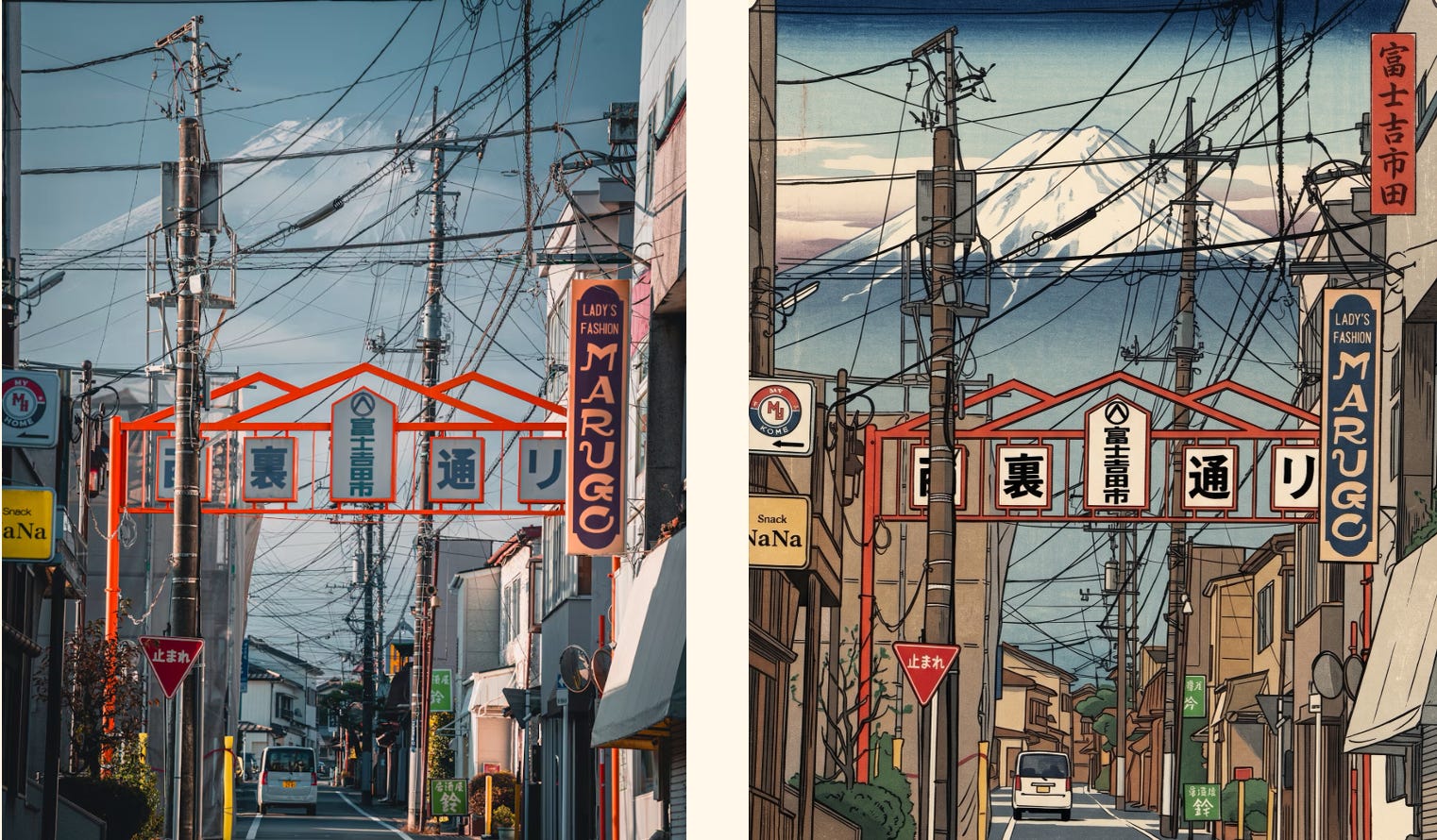
The power of art! Come and find out all about it on 18th November - it would be lovely to see you there: How to Read Japanese Art: A Beginner’s Guide.
—
Images:
Model of Azuchi Castle main keep, 6th floor: The Secret Story of the Construction of Azuchi Castle (fair use).
Radio calisthenics: Digital PR Platform (fair use).
Street scene: Sarmat Batagov, via Unsplash.
I loved the idea that a glimpse can be more beautiful than the full view — Fuji seen through the cooper's barrel. Living here, I pass the cables and clutter every day without really seeing them. Thank you for looking at our streets with such affection.
As you perhaps remember Chris, I am actually a fan of the ubiquitous wires, especially in the twilight. Somehow ‘grounds’ me in everyday life, and reminds me to look up.