



For a few months now, I’ve been meaning to write about a new book by fellow Substacker Hiroko Yoda. It’s called Eight Million Ways to Happiness, and it’s a wonderful – and very personal – overview of the practical wisdom contained in a Japanese worldview shaped by Shintō.
Hiroko was kind enough to give me an interview, and for this week’s newsletter I’m going to share some of the highlights.
Enjoy!
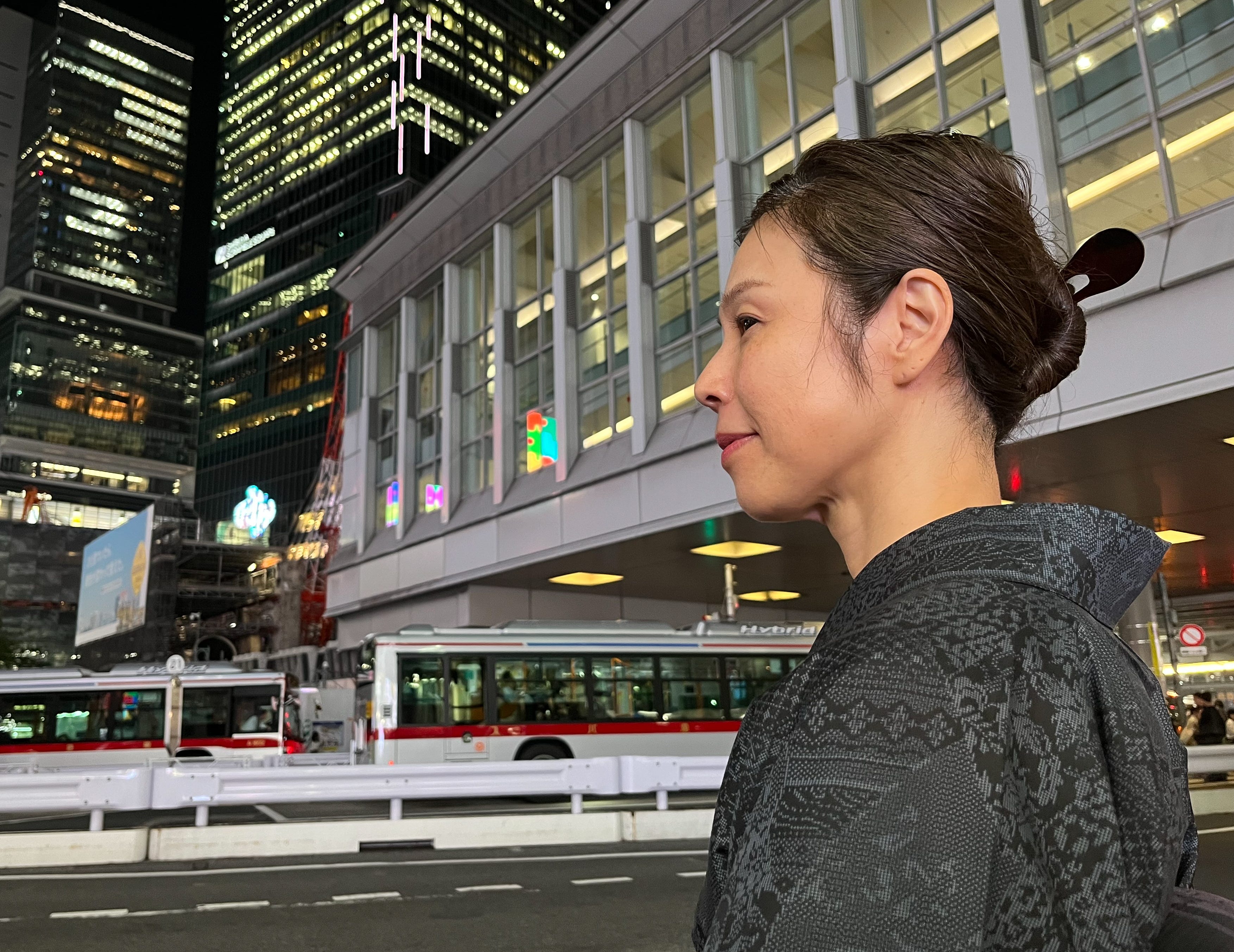
Hiroko Yoda
What’s the story behind this book?
I’ve been interested in Japanese history and culture and tradition for a very long time. I co-authored a series of books about Japanese folklore, starting with Yokai Attack! So it was only a matter of time before I knew I would write about kami too.
There are a lot of books about Japanese religious traditions but they tend to be very academic, or simplified into self-help methods or things like that. I wanted to get at how Japanese actually interact with these traditions on an everyday basis.
Then I realized: my mother’s passing had sent me deeper into my country’s spiritual traditions, to try to rebuild my identity.
What were these ideas and traditions like for you as a child?
I wasn’t raised religiously. Like most Japanese I didn’t get any education about religion in school either. There is actually a strict separation between Church and State in Japan.
But as a Japanese person living in Japan, I was unknowingly engaging in all sorts of spiritual traditions without realizing it. Perhaps the most common thing is hatsumode, the first visit to a shrine or a temple in the new year. Huge parts of the Japanese population do it every year. It’s ‘prayer,’ but I don’t think most people think about it that way. We see it as common sense to greet the new year. It’s tradition.
There are little jizo statues all over Japan. There are from Buddhism, and it is common to show respect to them, but I don’t think many see it as a religious act. Again, it’s kind of common sense.
Another example is the butsudan, which many homes have to commemorate deceased family members. They look like furniture, basically wooden shelves, and a lot of Japanese people have one at home. People traditionally leave offerings to their passed loved ones, like a cup of water, or food, or burning incense. This reminds them of their connections. I suspect the majority of people don’t see their offerings as specifically Buddhist acts. It is simply a traditional way of thinking about or ‘communicating’ with departed family.
At the heart of your book are the kami. In English, we often say ‘gods’ or ‘deities’. But perhaps that can be misleading?
I don’t think ‘gods’ is appropriate as a translation for kami, for a variety of reasons. In the West, ‘god’ or ‘gods’ typically involve concepts such as faith, worship, and even belief, none of which are prioritized in Japanese spiritual traditions. In Japan the important thing isn’t what you believe so much, as that you show respect and express gratitude.
In fact the concept of religion, which is translated as shūkyō in Japanese, is of very recent origin. It was coined in the late 1800s after the ports opened and many missionaries and evangelists began coming to Japan. We needed a way to explain these faith traditions that were so integral to Western cultures and shūkyō became the word.
This is why so many Japanese claim to not have a religion when asked in surveys. If you ask people if they have a religion (shūkyō) they associate it with those Western faith traditions. Many Japanese do not see the spiritual things they do in those terms.
I worked for many years as a localizer of games and literature and manga. There are many cases where we deliberately do not translate words because they are expressions of unique cultural concepts. Sushi, or samurai, or ninja are examples of this. Kami are a unique expression of Japan’s spiritual culture so I think they deserve to be called kami in English, too. It helps avoid misunderstandings.
Depictions of the kami, in myths and stories, are often personal; they have all sorts of human attributes. Do you find that way of depicting them helpful?
This is an interesting question. The kami are portrayed in very human ways in the old texts of the Kojiki and Nihon Shoki. Those portrayals help readers empathize with the kami in the stories.
But the fact is most Japanese do not read these books because they’re very, very old and cryptic to read. Everyone knows of them, and knows they are mythical histories, but that’s about it. I don’t feel that anthropomorphic portrayals of kami are as integral to Shinto as they are to other beliefs, such as Buddhism, which has many beautiful portrayals of its deities.
I wrote in my book about Lafcadio Hearn travelling a great distance to a shrine in hopes of seeing what a kami looked like, but when the priest opened the altar it was just a mirror. And that really confused Hearn.
Once I asked a Shinto priest what form the kami took and he said, they are a space in your heart. They’re a space for you to fill.
You’re in an interesting position, as someone who knows both Japanese and American culture very well. What, for you, are some of the things that people in the US - and perhaps the West more broadly - are struggling with right now? And how can Japan help?
I do not see myself as a guru or anything like that. But if I could make one observation it is that Westerners tend to draw lines among their categories, whether personal identities or faiths or whatever. And defining yourself is important. But when you draw hard lines, you can find yourself defining yourself in negatives: what you won’t do or think or whatever.
Japan tends to take an additive approach to its spiritual traditions, incorporating rather than refuting. And I am not saying I believe it is superior, or anything like that. I am saying it is another perspective, that some might find helpful. There’s always room for more - this is one of the foundations of our spiritual worldview. It’s why there are so many deities and spiritual beings of all sorts from all kinds of places interacting without friction here.
I think that flexibility is the most important thing I learned in my journey. And I think the best way to cultivate it is by cultivating a sense of gratitude towards life. And the best way to cultivate that is by going outdoors into nature, because it reminds us that we belong to a bigger system. That’s easy to forget.
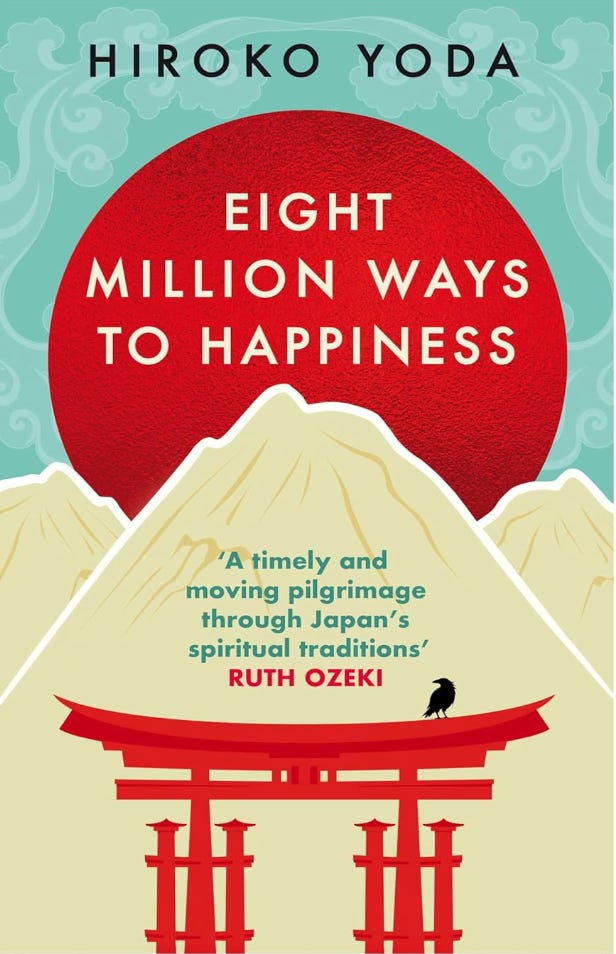
Thank you for reading! You can subscribe to Hiroko’s Substack HERE.
Thank you so much. A really loved this discussion. It really helped me in my understanding.
I’m just reading this book to review later this summer. Thanks for the great interview.